I was standing in my pajamas at 11:30 PM, shivering in a dark garage, swapping a charging cable between my wife’s SUV and my own sedan. It was the third time that week. I felt less like a tech-forward EV owner and more like a weary gas station attendant. That was my ‘enough is enough’ moment. If you’ve ever woken up to a dead battery because you forgot to switch the plug at 2 AM, you know exactly the frustration I’m talking about. I decided right then that we needed a second charger, but I immediately hit a wall of anxiety: would my house explode? Or, more realistically, would I be forced to spend $4,000 on a heavy-duty panel upgrade just to plug in a second car?
Stop the Cord Shuffle Without Blowing Your Main Breaker
Most people assume that two cars mean you need double the electrical capacity. I made that same mistake early on. I almost called an electrician to rip out my perfectly good 200-amp service because I didn’t think I had the ‘room’ for another 50-amp circuit. The reality is that your home is rarely using all its power at once. Before you panic, you should load test your house to see what’s actually happening when the dryer and the AC are humming. Today, I’m going to show you how to navigate the code requirements and physical installation of a second unit without losing your mind—or your savings.
Is a second charger actually worth the massive headache?
I get the skepticism. Wiring is expensive, and permits are a pain. But let’s be honest: the ‘cord shuffle’ is a marriage-tester. My goal is to help you figure out if you can use smart load balancing to share one circuit, or if you truly need a dedicated line. According to the National Electrical Code (NEC) Article 625, EV charging is considered a ‘continuous load,’ which means it draws full power for hours. This is why DIY mistakes in home charger installations are so dangerous; you aren’t just plugging in a toaster. Have you ever walked into your garage and smelled something ‘hot’ while the car was charging? If so, you’re already pushing your limits.
We’re going to walk through the panel upgrade strategies that actually make sense for 2025 and how to keep the inspectors happy on their first visit. I’ve been through the trenches of failed inspections and charred breakers so you don’t have to. Have you ever tried to run two chargers at once and tripped the main breaker? Drop a comment or reach out—I’d love to hear if I’m the only one who learned this the hard way.
Figure out if your panel is actually full
Before you spend a dime on copper, you need to do the math. Your electrical panel is like a bucket; you can only pour so much water in before it overflows. Most people look at their 100-amp or 200-amp main breaker and think they have plenty of room, but you have to account for the ‘base load’ of your home—the fridge, the HVAC, and the stove. You should start by learning how to calculate if your 100-amp service can handle a daily commute for two vehicles. If your calculation shows you are near the edge, don’t worry. You don’t necessarily need a bigger bucket; you just need to manage how fast the water pours.
Share the juice without melting your mains
The most elegant solution for a two-EV household is load sharing (or power pooling). This is where two chargers communicate with each other to stay under a specific limit. If only one car is plugged in, it gets the full 40 amps. If both are plugged in, they each take 20. I once ignored this and tried to ‘piggyback’ a second unit onto a circuit I thought was underutilized. I didn’t check the busbar properly and almost caused a disaster. You must why you should check your panel for double-tapped breakers before adding any new hardware, as this is a major safety violation that can lead to arcing. Using a smart system allows you to how to load balance your home electrical system without a full panel swap, effectively doubling your charging capacity without upgrading your service line.
Details that keep the fire department away
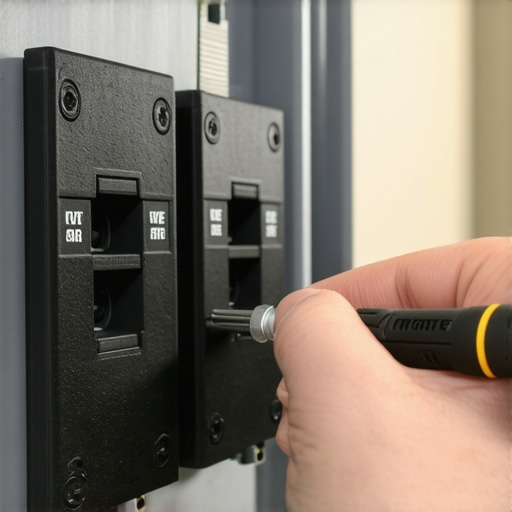
When you start the physical install, the small things will fail you. I remember helping a neighbor who used generic 10-gauge wire for a 40-amp charger because it was cheaper. The insulation literally started to bubble after two hours of charging. You need to know the exact gauge of wire you need for a 60-amp circuit—usually 6 AWG copper—to handle the heat. But even the right wire fails if the connections are loose. I now carry a torque screwdriver for every job because the specific torque settings that prevent panel fires during high load charging are not suggestions; they are requirements. If those lugs aren’t tightened to the inch-pound specified by the manufacturer, they will expand and contract until they create a high-resistance hot spot.
Get the green sticker from the inspector the first time
If you’re running wires across the garage, you might find it easier to learn how to upgrade your garage sub-panel for dual charging stations rather than running two separate home runs back to the main house. This keeps your wiring runs short and your garage organized. However, keep an eye on your hardware choices. I’ve seen homeowners get rejected because they used a budget breaker that wasn’t rated for continuous duty. It turns out the specific breaker brand that keeps tripping on level 2 chargers is often the one that came in the ‘value pack’ at the hardware store. To avoid a second trip fee, make sure your labels are clear and your conduit is secured according to the latest code. Following a strict workflow is the only way how to pass your electrical inspection on the first visit and finally put the ‘cord shuffle’ behind you for good.
Let’s dig deeper into what actually happens behind that panel cover. Most homeowners—and even some general electricians—operate under the myth that if your breaker slots are full, you’re forced into a $3,000 service upgrade. I’m here to tell you that’s often a waste of money. While a hardware-heavy approach is the ‘easy’ recommendation, you can often bypass a full swap by using tandem breakers or, more intelligently, software-based energy management. The National Fire Protection Association (NFPA) notes that a significant portion of residential electrical failures stem from sustained high-current loads, but these aren’t always caused by a lack of capacity; they’re caused by heat management issues at the connection points.
Stop obsessing over empty breaker slots
People look at a crowded panel and panic. The real concern isn’t physical space; it’s the calculated load on your busbars. If you’re savvy, you can implement how to load balance your home electrical system without a full panel swap by using chargers that ‘talk’ to one another. This allows you to stay within your existing 200-amp limit while still serving two thirsty vehicles. I’ve seen people rip out perfectly good infrastructure because they didn’t realize their utility company actually allows for a higher diversified load than the ‘sticker’ on the panel suggests. Before you sign a contract for a new service entrance, make sure you how to verify code compliance for your ev charger installation to see if your local jurisdiction recognizes smart energy management systems (EMS).
Why does my charging speed drop even when the car is cool?
This is a question I get constantly from advanced owners. You’ve got the right wire and a 50-amp breaker, but you’re only pulling 30 amps. Usually, this is a communication handshake issue or a thermal throttle. If the charger detects even a slight resistance-based heat spike at the terminal, it will roll back the amperage to prevent a fire. This is why troubleshooting ev chargers common compliance pitfalls and fixes often starts with a torque wrench, not a software reset. If your lugs aren’t tightened to the manufacturer’s exact specifications, that resistance creates a ‘heat signature’ that the car’s onboard computer interprets as a fault. You might also be dealing with a how to troubleshoot a communication error between your car and charger, especially if you’re using third-party adapters or extension cables that interfere with the pilot signal.
The voltage drop trap that kills your efficiency
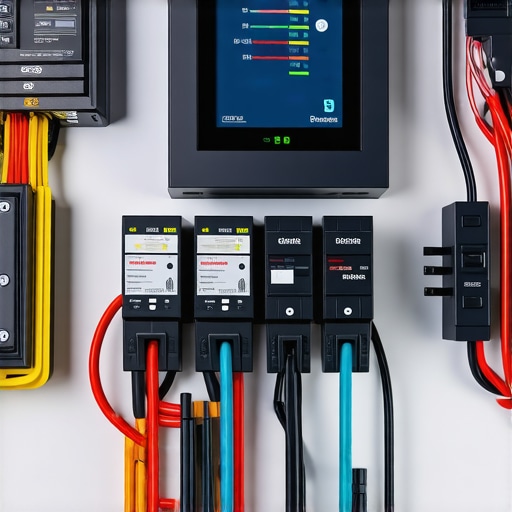
Here is the ‘oops’ factor most DIYers and budget contractors miss: distance. If your panel is on the opposite side of the house from your garage, a standard 6 AWG wire might meet the letter of the law but fail the test of physics. Over a 100-foot run, you’ll experience a ‘voltage drop.’ This means your charger has to work harder, generates more heat, and wastes energy you’re paying for. I always recommend checking for the common wire sizing error that causes voltage drops during charging. If you’re going a long distance, up-sizing to 4 AWG copper is a small upfront cost that saves hundreds in lost efficiency over the life of the car. If you don’t account for this, you might notice 3 signs your main breaker is running dangerously hot during overnight charging simply because the system is struggling to push current through an undersized ‘straw.’
Don’t let a generic breaker ruin your morning
One of the most frustrating nuances is brand compatibility. Not all breakers are created equal, even if they fit the slot. Some older ‘value’ breakers have a trip curve that is too sensitive for the ‘inrush’ current of an EV. You might find that the specific breaker brand that keeps tripping on level 2 chargers in your neighborhood is exactly what you just installed. Always look for a breaker rated for ‘100% continuous duty’ if you plan on maxing out your charging speed for 8 hours straight. This level of detail is what separates a safe, reliable setup from one that leaves you stranded with a half-charged battery at 7 AM. Are you currently battling a charger that seems to have a mind of its own? Have you ever fallen into this trap? Let me know in the comments. If you’re still feeling stuck, it might be time to look into upgrading your panel for better ev charging performance to ensure your home can handle the future of transport.
I don’t just toss any old pliers in my bag when I’m checking a high-load system. If you’re serious about a dual-charger setup, you need a thermal camera. I personally use a FLIR attachment for my phone because I once spotted a loose neutral that was hitting 185 degrees Fahrenheit—completely invisible to the naked eye but a literal ticking time bomb. Finding these hot spots early is the core of ev charger troubleshooting expert tips for common issues. Beyond the thermal imaging, my calibrated torque screwdriver is the most important tool I own. The NFPA 70 (National Electrical Code) 2023 Section 625.42(B) specifically addresses the use of Energy Management Systems (EMS) to control loads, but no software can fix a physically loose terminal that’s slowly melting. You will find that ensuring code compliance when installing ev chargers is largely about these boring, physical connection details that most DIYers skip.
The professional toolkit for a fail-safe garage
If you want to move beyond the basics, you need to stop guessing. I recommend every two-EV household keep a dedicated contact cleaner and a set of non-conductive brushes. Over time, the silver-plated pins in your charging handle can oxidize or collect grime, leading to communication errors. Learning how to clean the pins on your charging handle safely is a five-minute task that can prevent a $600 handle replacement. I’ve seen chargers ‘fail’ simply because a piece of pocket lint got jammed in the pilot pin hole, breaking the handshake between the car and the wall unit. It’s also vital to learn how to spot a dying breaker before it shuts down your charging session, such as listening for a faint buzzing or noticing discoloration on the plastic casing.
How do I maintain my home charging infrastructure over time?
Maintenance isn’t just about the hardware; it’s about the bits and bytes. Most modern smart chargers receive ‘Over-the-Air’ (OTA) updates that improve load-sharing algorithms or fix security vulnerabilities. I make it a habit to check my app once a month to ensure everything is current. You should know how to update your charger software without calling a technician to avoid paying for a service call just to hit a ‘confirm’ button on your screen. Furthermore, if your units are mounted outside, you have to be more proactive. I follow a strict routine of 3 maintenance tasks that keep your outdoor charger running through winter, which includes checking the gasket seals and ensuring the cable hasn’t become brittle from UV exposure. Neglecting these small checks is what leads to those 2 AM ‘charger not found’ notifications.
The shift toward bidirectional power
The future of this technology isn’t just about taking power from the grid; it’s about giving it back. We are moving toward a world of V2H (Vehicle-to-Home) where your two cars act as a massive battery backup for your entire house during a blackout. This will make your load-sharing and panel configuration even more critical. In the next few years, I predict we will see standard panel upgrades that include integrated smart-gates as a requirement, not an add-on. If you’re already upgrading your panel for better ev charging performance, ask your electrician about ‘backup-ready’ lugs. My advanced tip for you today: buy a cheap infrared thermometer and scan your breaker panel while both cars are charging at full tilt. If any breaker is 30 degrees hotter than the others, call a pro immediately—it’s the best $20 you’ll ever spend on home safety.
Real-World Realizations From My Midnight Garage Sessions
I’ve spent more hours than I care to admit staring at busbars and breaker diagrams, and if there is one thing I’ve learned, it’s that the ‘cord shuffle’ is usually a symptom of a system that wasn’t planned for growth. One major lightbulb moment for me was realizing that your panel’s physical space has nothing to do with its actual electrical capacity. You can have ten empty slots and still be at risk if your total draw exceeds the main breaker’s rating. This is why I always emphasize how to balance your household loads to avoid tripping the main breaker before you ever buy your second wall unit. Another hard lesson? Labels matter more than you think. I once failed an inspection simply because my handwriting was messy; save yourself the trouble and look up the specific circuit labels required by the electrical inspector before they knock on your door. Finally, don’t ignore the ‘hum.’ If your panel is making noise, it’s not just ‘working hard’—it’s struggling. Catching those small signs is the core of ev charger troubleshooting expert tips for common issues that keep your home safe while you sleep.
The Only Tools You Really Need for a Pro-Level Install
I don’t believe in buying every shiny gadget at the hardware store, but three things are non-negotiable for a two-EV household. First, a high-quality torque screwdriver; without it, you are just guessing at safety. Second, a simple infrared thermometer to check for hot spots during those first few long charging sessions. And third, a solid understanding of your local requirements. I keep the ensuring code compliance when installing ev chargers guide bookmarked on my phone because code changes faster than car software. These tools give me the peace of mind that I’m not just ‘making it work,’ but building something that meets the highest standards of safety and efficiency.
Build an Electrical System That Grows With Your Cars
Transitioning to a multi-EV home doesn’t have to be a source of anxiety or a drain on your savings account. By focusing on smart load management and precise physical connections, you can enjoy the convenience of dual charging without the fear of a system failure. The technology is evolving rapidly, and by upgrading your panel for better ev charging performance today, you are effectively future-proofing your most valuable asset—your home. Take it one wire at a time, respect the amperage, and you’ll never have to shiver in your pajamas in the garage at midnight ever again. Have you ever noticed your lights flickering when you plug in both cars at once? Let me know in the comments below!