I remember standing in my pajamas at 2 AM, staring at my electrical panel with a flashlight. There was this faint, acrid scent—like a hair dryer that has been left on too long. My new EV was humming away in the driveway, and I thought, “It is probably just the new-car smell of the charger.” It was not. I had made a massive mistake by assuming that because the breaker had not tripped yet, everything was running within its limits. That is a dangerous game to play with a 48-amp load running for eight hours straight. Today, I am going to help you identify the red flags I missed before they turn into a call to the fire department. [image] Have you ever noticed a weird smell or a buzzing sound coming from your garage wall while your car is plugged in?
Stop Ignoring That Metallic Smell
That “hot electronics” smell is actually the insulation on your wires starting to off-gas. When I first started charging at home, I did not know how to tell if my electrical panel could handle a level 2 charger properly. I just saw an open slot and went for it. The reality is that your main breaker is the gatekeeper for your entire home. If it is running hot, it is a sign of a loose connection or a serious overload. I once ignored scary noises in the panel thinking it was just the hum of the transformer. In reality, it was micro-arcing. According to the National Fire Protection Association (NFPA), electrical failures or malfunctions are the second leading cause of U.S. home fires, and many of these start at the service panel.
Wait, isn’t electricity supposed to be warm anyway?
This is the exact question I asked my electrician friend after he saw my slightly charred breaker. I figured if 50 amps were flowing through a piece of metal, it is going to get a little toasty, right? While some heat is expected—physics is physics, after all—there is a massive difference between “warm to the touch” and “painful to hold your finger on.” If you find yourself wondering why your specific breaker brand keeps tripping, it might not be a faulty breaker; it might be the heat build-up from a poor seat on the bus bar. My early mistake was thinking I could just “tough it out” until my next service appointment. Don’t be like me.
The Mistakes I Made So You Don’t Have To
One of my biggest blunders was failing to balance the household loads correctly. I would have the dryer running, the dishwasher going, and the EV pulling max power all at the same time. This puts immense stress on the main breaker’s internal springs and contacts. Over time, that heat weakens the metal, making it even less efficient and even hotter. It is a vicious cycle that usually ends in a puddle of melted plastic and a very expensive emergency repair. We are going to break down exactly how to spot the physical signs of this decay before it is too late.
Size Your Wires for the Long Haul
The first thing you have to look at is the physical diameter of the copper feeding your charger. I once watched a neighbor try to run a 48-amp charger on 10-gauge wire because he had a leftover roll from an old water heater project. He thought he was being clever, but he was actually building a giant heating element inside his walls. You cannot skip the math here. To prevent a meltdown, you must use the exact gauge of wire you need for a 60-amp circuit, which is typically 6 AWG for THHN in conduit. If you use a wire that is too thin, it creates massive resistance. That resistance generates heat, and that heat eventually travels back to your breaker, causing it to trip or, worse, melt. I have seen far too many common wire sizing errors that melt breakers during long charging sessions because people treat EV charging like a standard appliance. It is not; it is a continuous load that runs for hours, and your wiring needs to be beefy enough to handle that marathon.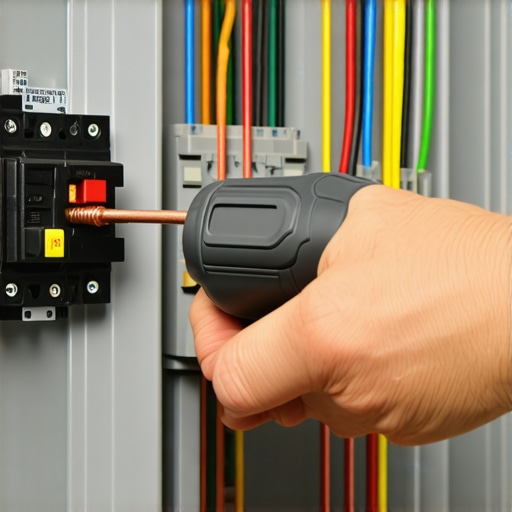
Don’t Just Guess the Tightness
I used to think my “calibrated elbow” was enough to tell if a lug was tight. I was wrong. After noticing some discoloration on my neutral bar, I finally bought a torque screwdriver and discovered my main connections were nearly a full turn loose. This is a massive problem because a loose connection creates a tiny air gap where electricity jumps—creating heat and carbon buildup. This is the hidden danger of loose neutral wires in your electrical panel. If you are troubleshooting a hot panel, get a torque wrench and verify every single lug matches the manufacturer’s specifications listed on the panel door. When I finally tightened mine to the exact inch-pounds required, the operating temperature of my main breaker dropped by nearly twenty degrees. This is a critical step for ensuring code compliance when installing EV chargers, as inspectors are increasingly checking for proper torque marks during their walkthroughs.
Balance Your Power Diet
You also need to look at how your house “eats” electricity. If your charger is on the same side of the panel as your electric range and your AC unit, you are essentially creating a hotspot on one half of your bus bar. I fixed my overheating issue by moving my EV breaker to the bottom of the stack, away from the other heavy hitters. Learning how to load balance your home electrical system without a full panel swap is the smartest thing you can do if you are working with a limited 100-amp or 200-amp service. It’s about spreading the heat load so no single part of the panel is overwhelmed. Doing this correctly is often the difference between a system that lasts thirty years and one that fails in three. It is also a major factor in how to pass your electrical inspection on the first visit without having to pay for a costly return trip from the contractor.
Hardwiring is Actually Safer Than Using a Plug
Most people love the idea of a NEMA 14-50 plug because it feels ‘portable.’ In my experience, this is the biggest mistake a homeowner can make for a high-amperage daily driver. While the plug is convenient, it introduces two extra points of failure: the receptacle itself and the plug blades. I’ve seen countless melted outlets because budget-grade receptacles weren’t designed for 8-hour continuous thermal stress. That is why I always recommend the benefit of a hardwired charger over a NEMA plug for anything over 32 amps. Hardwiring removes the resistance of the plug-to-receptacle connection, significantly reducing the heat generated inside your wall box. Have you ever fallen into this trap of choosing convenience over a solid connection? Let me know in the comments. 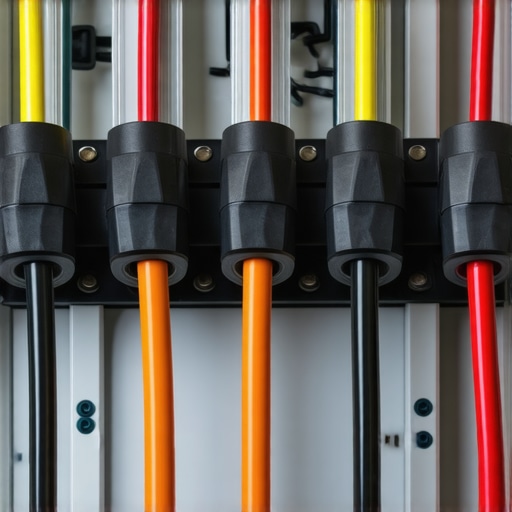
The Invisible Rule That Fails Your Inspection
You could have the most beautiful wiring in the world, but if you don’t respect the ‘working space,’ you will fail your inspection. I once saw a guy tuck his charger and sub-panel behind a massive shelving unit to ‘keep things tidy.’ The inspector didn’t even pull out his screwdriver; he just walked away. According to the Electrical Safety Foundation (ESFI), maintenance and inspections require a clear 30-inch wide by 36-inch deep space in front of electrical equipment. This is the working space violation that fails more EV panel inspections than anything else. If a technician can’t safely stand in front of the equipment to service it, it’s a code violation and a massive safety hazard during an emergency.
Why does my GFCI breaker keep tripping for no reason?
This is a sophisticated headache known as ‘nuisance tripping.’ Most modern EV chargers have built-in GFCI protection. If your local code requires you to also use a GFCI breaker in the panel, these two systems can sometimes fight each other. They ‘leak’ a tiny amount of current to ground as part of their self-test, and together, they can exceed the trip threshold. When troubleshooting EV chargers for common compliance pitfalls and fixes, we often look for these overlapping safety features. If you are experiencing this, you might need to check for expert tips for common issues specifically related to your charger’s firmware or the sensitivity of your breaker brand.
Stop Overthinking the Panel Upgrade
Everyone tells you that you need a 200-amp service to own an EV. While it’s nice to have, it isn’t always a requirement if you use your head. I’ve helped people successfully implement panel upgrade strategies to meet EV charging code requirements in 2025 without the $5,000 price tag of a full utility-side upgrade. By using smart load-shedding devices or simply upgrading your panel for better EV charging performance through localized sub-panels, you can save a fortune. The trick is knowing how to verify code compliance for your EV charger installation before you start buying parts. If your app is acting up during these sessions, it might not be the power at all; often, the reason your smart charger app keeps losing connection is simple signal interference or outdated software. You can usually fix this by learning how to update your charger software without calling a technician, which is often the first step in troubleshooting EV charger connectivity problems.
Buy a Thermal Camera and Stop Guessing
If you want to move beyond the ‘smell test’ for electrical safety, you need a thermal imaging camera. I picked up a compact unit that plugs into my smartphone, and it changed everything. Instead of wondering if my breaker was getting too hot, I could actually see the heat signature in real-time. A healthy breaker should look relatively uniform, but a failing one will glow like a supernova at the point of connection. I use this tool once a month during a peak charging session to ensure my panel upgrades for EV chargers are holding up. It is the only way to catch a high-resistance connection before it turns into a fire. If you see a bright white spot where the wire enters the breaker, that is your signal to shut it down immediately and check the torque.
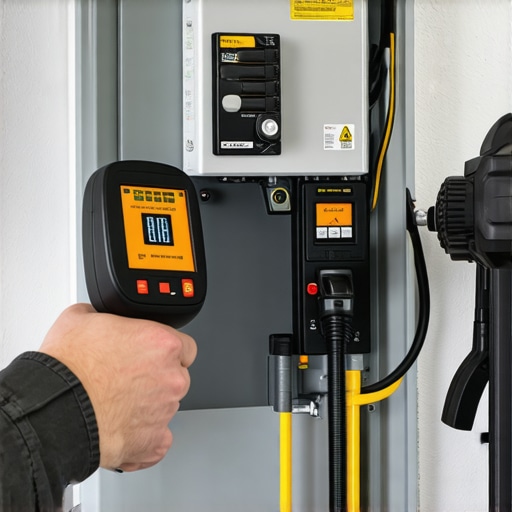
Beyond visual checks, you need to be proactive about cleaning the physical hardware. We often forget that these chargers live in dusty garages or even outdoors. Over time, oxidation can build up on the metal contacts of your charging handle. I have a strict routine of cleaning the pins on your charging handle safely using specialized contact cleaner and a lint-free swab. This prevents the ‘hot handle’ syndrome that plagues so many long-term EV owners. It is also a core part of expert tips for common issues that keep your car from throwing those annoying ‘Charge Rate Reduced’ errors.
How do I maintain my charging station over time?
Maintenance is not just about the wires; it is about the software. Most modern chargers are basically computers that happen to move a lot of electricity. I have seen chargers ‘brick’ themselves because a homeowner ignored a critical firmware update for six months. I highly recommend learning how to update your charger software without calling a technician. These updates often include improved thermal management algorithms that can actually save your hardware. If your app feels sluggish, you are likely dealing with troubleshooting EV charger connectivity problems that can be solved with a simple router reboot or a signal extender in the garage. Keep your software fresh, and your hardware will follow suit.
You must also stay obsessed with the National Electrical Code. Specifically, NEC 110.14(D) requires the use of a calibrated torque tool for any terminal that has a specified torque value. This is not a suggestion; it is a safety requirement. When I am verifying code compliance for your EV charger installation, the torque wrench is my most important tool. I predict that in the next five years, we will see smart panels with built-in torque sensors and real-time thermal monitoring as standard equipment. Until then, the responsibility lies with us. I want you to go out to your garage tonight, open your charger’s app, and check if there is a pending firmware update. It is the easiest five-minute ‘repair’ you will ever do.
Living with a high-powered EV charger in your garage is a lifestyle change that requires a bit of a shift in how you view your home’s electrical health. It isn’t just a set-it-and-forget-it appliance; it is the single largest load your house will ever pull. After years of testing and a few close calls, I’ve realized that the small, proactive checks are what prevent the 3 AM emergencies.
What I Learned After Nearly Melting My Service Panel
The most important realization I had was that a breaker doesn’t have to trip to be failing. Heat is a slow, silent killer of copper and plastic. My biggest takeaway? Buy a torque screwdriver. Most homeowners think ‘tight is tight,’ but thermal expansion from daily charging sessions will eventually wiggle even the best connections loose. I also learned that if you feel any heat on the exterior of the panel door, you are already in the danger zone. I spent hours researching panel upgrades for EV chargers before I realized that sometimes, simply tightening a few lugs and cleaning the bus bar can save you from a full replacement. Finally, remember that your charger’s software is a safety tool. Those annoying firmware notifications often include better thermal throttling logic that protects your home while you sleep.
The Survival Kit for Stress-Free Home Charging
If you want to be truly self-reliant and avoid the most common DIY mistakes in home charger installations, there are three things you should have on your shelf. First, a basic thermal imaging camera for your phone—it’s the only way to see heat before you smell it. Second, a high-quality contact cleaner for your charging pins, especially if the real reason your charging handle feels hot to the touch is actually just grit and oxidation blocking the flow. Third, I always keep a digital copy of the latest NEC requirements on my phone for how to verify code compliance for your EV charger installation. Having the actual rules on hand makes talking to an electrician or an inspector much easier and ensures nobody cuts corners on your safety.
Enjoy the Silent Power Without the Stress
Home charging should be a luxury, not a source of anxiety. By taking these small, disciplined steps—checking your torque, watching your heat signatures, and staying updated—you turn your garage into a high-tech fueling station that is safer than any gas station could ever be. Don’t wait for a smell or a sound to tell you something is wrong. Take charge of your system today so you can enjoy the full potential of your electric vehicle with total peace of mind regarding code compliance for your EV charger installation. Have you ever checked your breaker panel with a thermal camera during a peak charging session, and did you find any surprising hot spots? Let me know in the comments below!