I’ll never forget the Tuesday I sat in my car, staring at a flashing 3% battery icon while my coworkers chatted about their weekend plans. I had a forty-mile commute home and exactly zero miles of range left. I spent my lunch break searching for a public charger, only to find the nearest one was occupied by a hybrid that hadn’t moved in four hours. It was a wake-up call. I realized that if I was going to keep driving electric, I couldn’t just hope for the best anymore. I needed a reliable way to top off while I was at my desk.
Stop Begging for Juice and Start Negotiating for a Station
Let’s be honest: asking your boss for a workplace charger feels a lot like asking for a gold-plated stapler. You worry they’ll see it as a luxury or, worse, a massive headache they don’t have time to manage. I made the mistake early on of just complaining to HR about the lack of plugs. Spoiler alert: complaining gets you nowhere. I had to learn the hard way that you need a business case, not just a personal grievance. Today, I’m sharing the exact roadmap I used to turn my boss from a skeptic into a champion for workplace charging. We’re going to look at the numbers, the logistics, and how to handle the technical hurdles—like whether the office needs panel upgrades for ev chargers or if they can load balance the system to save money.
Will My Boss Actually Listen to a Request Like This?
It’s the biggest fear we all have. You think they’ll laugh you out of the office because of the perceived cost. But here’s the thing: workplace charging is becoming a massive talent magnet. According to the U.S. Department of Energy, employees are six times more likely to drive an EV when charging is available at work. Your company isn’t just buying a charger; they’re buying employee loyalty. Before you walk into that meeting, you need to know your stuff. You need to understand why some chargers work better with certain car brands and be ready to explain that the code compliance essentials aren’t as scary as they look. Have you ever tried to bring up the topic of EV charging at a staff meeting? I’d love to hear how it went—drop me a line on our contact page and let’s compare notes. Getting a ‘yes’ isn’t about luck; it’s about showing them that ensuring code compliance is a standard part of the process and that there are even rebates available to help offset the price tag. Let’s get into the nitty-gritty of the pitch.
Audit the Office Panel Before Opening Your Mouth
First things first: you need to know if the building can actually handle the extra draw. Think of your office’s electrical panel like a multi-lane highway. If every lane is already packed with industrial AC units, rows of desktop computers, and server racks, you can’t just shove a fleet of EV chargers into the mix without causing a massive traffic jam—or in this case, a tripped main breaker. I learned this the hard way during a meeting with our facility lead, Dave. I was halfway through a PowerPoint about ‘green initiatives’ when he asked if I’d accounted for the 200-amp limit on the sub-panel near the garage. I hadn’t. I looked like an amateur. Now, I tell everyone to start by learning how to tell if your electrical panel can actually handle a level 2 charger. If the capacity isn’t there, don’t panic. You don’t always need a $10,000 overhaul. You can suggest they load balance the system to distribute power intelligently during peak work hours. If a full upgrade is unavoidable, come prepared with a breakdown of panel upgrades for ev chargers so they aren’t blindsided by the quote.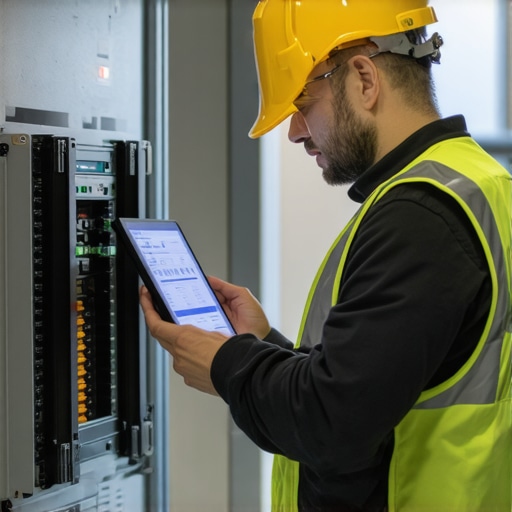
Stop Relying on Spotty Office Wi-Fi
One of the most common troubleshooting ev charger connectivity problems is simply poor signal in the concrete basement of a parking garage. Your boss is going to lose their mind if the ‘smart’ charger they just paid for can’t even process a payment or track usage data because the signal is dropping. When you are proposing equipment, skip the cheap residential units. I always recommend arguing for why your commercial charger needs a dedicated cellular connection. It bypasses the corporate firewall—which the IT department will thank you for—and ensures the station stays online even when the office router needs a reboot. In my last office, we spent three weeks trying to get the Wi-Fi to reach ‘Spot 42’ before finally giving up and installing a cellular gateway. It’s a small upfront cost that saves a mountain of technical debt later.
Win the Permit War with Proper Documentation
Finally, you have to address the ‘safety’ elephant in the room. Most managers are terrified of fire marshals and failed inspections. Show them that you’ve done the homework on ensuring code compliance when installing ev chargers. Mention specific details, like avoiding the working space violation that fails more ev panel inspections than anything else. When you talk like a pro about the benefit of a hardwired charger over a simple plug-and-socket setup, you move from being ‘the employee with a request’ to ‘the project lead with a plan.’ It’s much harder to say no to a well-researched proposal that accounts for verifying code compliance from day one.Once the boss says yes, the real work begins. This is where I see most people—even seasoned facility managers—make expensive mistakes that could have been avoided with a little more technical foresight.
Stop Believing the 200-Amp Lie
There is a persistent myth in the EV world that you absolutely must have a 200-amp service to even think about a Level 2 charger. I’ve seen homeowners and office managers spend thousands on unnecessary service entries because an electrician wanted a bigger payday. The truth is often more nuanced. By using smart energy management, you can learn how to use a 100-amp panel for ev charging without a costly upgrade. Modern load-shedding devices can pause your charger for the ten minutes your office elevator or breakroom microwave is pulling peak power, saving you from a $5,000 utility bill. If you aren’t looking into upgrading your panel for better ev charging performance through logic rather than just bigger copper, you’re leaving money on the table. Have you ever fallen into this trap where an ‘expert’ told you to replace the whole panel when you didn’t need to? Let me know in the comments.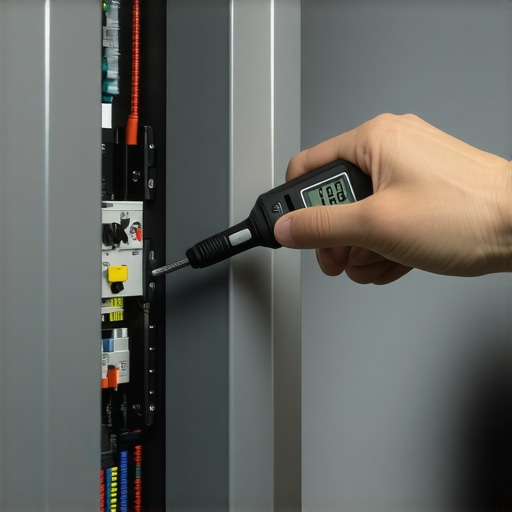
The One Screw That Could Cost You an Inspection
If you want to spot a pro versus a hobbyist, look at their toolbox. If there isn’t a torque wrench, walk away. I call this the ‘Oops Factor.’ In the world of high-voltage charging, ‘tight enough’ is a recipe for a thermal event. According to the National Fire Protection Association (NFPA) 70 guidelines, specific torque settings are mandatory for all terminal connections because the continuous heat cycle of an 8-hour charge causes metal to expand and contract. This is the forgotten torque spec that fails half of all panel inspections. A loose wire doesn’t just fail an inspection; it creates resistance, which leads to 3 common wire sizing errors that melt breakers during long charging sessions. It’s a silent killer that most people never check until they smell burning plastic.
Why Does Your Session Fail Mid-Charge?
It’s the most frustrating notification you can get: ‘Charging Interrupted.’ Most people assume the car is broken or the charger is a lemon. Often, it’s actually the house or office protecting itself. If you haven’t calculated your total load correctly, you’ll find out why your new ev charger keeps shutting down your whole house the moment the AC kicks in. This is why I advocate for load management over simple upgrades. Knowing how to balance your household loads to avoid tripping the main breaker is the difference between waking up to a full battery and a dead car. If you’re still seeing issues, check out these ev charger troubleshooting expert tips to see if it’s a software handshake issue or a physical hardware fault. High-level EV ownership is about being proactive, not just reacting when the lights go out.
Stop Ignoring Your Charging Handle Until It Overheats
Most people treat their EV charger like a toaster: they plug it in and forget it exists until it stops working. But a Level 2 station is a high-performance appliance that pulls more sustained current than almost anything else in your building. I’ve seen pins on charging handles become pitted and oxidized simply because they were left dropped on a dusty garage floor. If you want to avoid a massive repair bill, you need to learn how to clean the pins on your charging handle safely. A tiny bit of debris creates resistance, and resistance creates heat. If you’ve noticed the real reason your charging handle feels hot to the touch is usually a poor connection, you’re already halfway to a hardware failure. I make it a habit to wipe down my connectors once a month with a lint-free cloth and a quick blast of compressed air to keep the path of electricity clear.
How do I maintain my charging setup over the long haul?
Maintenance isn’t just about cleaning; it’s about a proactive inspection cycle. Every six months, I do a ‘walk-around’ of the entire system. I check the cable jacket for any nicks or signs of UV damage, especially for outdoor units. If you are running an outdoor setup, remember that why outdoor charging stations need more than just a plastic cover is due to temperature-induced expansion and contraction of the internal terminals. I also take a look at the breaker inside the panel. If there is any discoloration or a faint buzzing sound, that is a massive red flag. Catching 3 scary noises your electrical panel makes early can save you from a full-blown electrical fire. Consistent maintenance ensures that your upgrading your panel for better ev charging performance wasn’t a waste of money.
The Three Tools That Save Me From Middle-of-the-Night Calls
If you’re serious about managing more than one station, you need more than a standard screwdriver. My go-to is a pocket-sized thermal camera (like a FLIR One). It’s the ultimate ‘BS detector’ for electrical work. During a peak charging session, I point it at the breaker and the wall unit. If I see a bright white ‘hot spot,’ I know a connection is loose before it ever trips. This is the most effective way to spot a dangerous heat build-up in your ev charging cable. 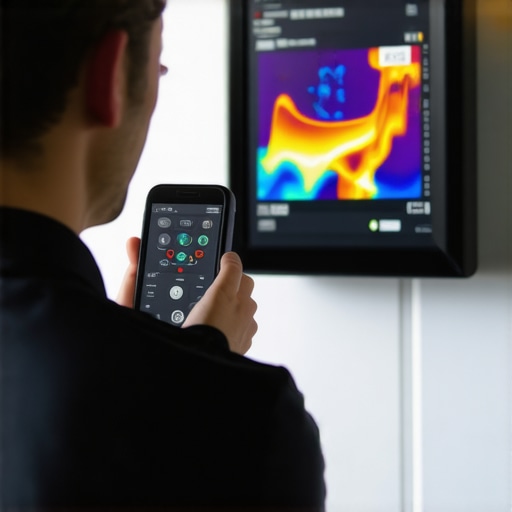 I also keep a set of insulated hand tools and a dedicated torque wrench. Remember, the forgotten torque spec is a code requirement for a reason. According to the NFPA 70B (Standard for Electrical Equipment Maintenance), loose connections are the leading cause of equipment failure in high-voltage systems. If you aren’t re-checking those terminal screws a year after installation, you’re inviting trouble. Finally, don’t forget the digital side. You should regularly check for firmware updates; learning how to update your charger software without calling a technician can fix handshake bugs with new car models that cause why your ev charger stops mid-session. I predict that in the next five years, bidirectional charging (V2H) will become the standard, making these maintenance routines even more critical as your car begins to power your home during outages. If you want to stay ahead of the curve, I challenge you to perform a simple ‘heat check’ on your charging handle tonight—if it’s more than warm to the touch, it’s time to investigate.
Hard Lessons from My First 5,000 Charging Hours
After years of managing both home and office setups, I’ve realized that the most expensive problems are usually the quietest ones. Here are a few things I learned the hard way:
- The Software Handshake: Always double-check your app before blaming the hardware. Most troubleshooting ev chargers common compliance pitfalls and fixes actually start with a simple firmware update or a cloud server glitch.
- Documentation is Armor: Keep a digital folder of every permit and inspection report. If you ever need to sell your home or office, showing that you followed how to pass your electrical inspection on the first visit adds massive value and peace of mind for the next owner.
- Listen to the Humming: A slight buzz at the panel isn’t just ‘background noise’; it is often a sign of a loose lug or an overloaded circuit. Catching these early prevents the melted breaker scenarios that happen during long summer charging sessions.
My Personal EV Maintenance Arsenal
You don’t need a warehouse of gear, but these three items have saved my skin more times than I can count. First, get a pocket-sized thermal camera. Being able to spot a dangerous heat build-up in your ev charging cable before it becomes a fire hazard is worth every penny. Second, invest in a dedicated torque wrench to avoid those forgotten torque spec errors that plague even professional-looking installs. Finally, for those managing multiple units, I highly recommend following the maintenance guide for commercial fleet charging stations as a monthly checklist to keep equipment uptime high. If you are still feeling overwhelmed by the technical requirements, don’t hesitate to reach out through our contact page for a professional walkthrough.
#IMAGE_PLACEHOLDER_E#
Lead the Charge for a Greener Office
Bringing EV charging to your workplace is more than just a convenience; it’s a statement about the future of your company culture. By advocating for a proper panel upgrade and insisting on high safety standards, you are making it easier for every one of your coworkers to make the switch to electric. It might feel like a lot of technical jargon today, but tomorrow, you will be the person everyone thanks when they plug in and see that green charging light. Don’t be afraid to be the expert in the room—you have already done the hardest part by starting the conversation. What is the biggest hurdle you are facing in getting a charger installed at your office right now? Let me know in the comments below!