I remember the first time I actually looked at my circuit breaker after the electrician left. It was gleaming, new, and promised me a future of never having to worry about my car’s battery again. But then the bill arrived. $2,400. My heart sank. I knew I needed the upgrade, but I also knew I needed that money for, well, everything else. I spent three nights staring at my computer screen until my eyes went blurry, all because I didn’t want to miss out on the federal help I knew was out there. If you’ve ever felt that ‘did I just make a huge financial mistake’ feeling after an upgrade, you aren’t alone. I was terrified that a simple paperwork error would cost me a four-figure credit. Most people assume the tax credit only applies to the plastic box on the wall, but the real savings often hide in the wiring and infrastructure costs. I’ve been right where you are, and I am going to show you exactly how to get that money back using the right paperwork.
Stop Giving the IRS Your Hard-Earned Installation Money
We’ve all been there—trying to do the right thing for our homes and our cars, only to get buried in bureaucracy. When I first dove into the world of residential energy credits, I was convinced I’d need a PhD in accounting to see a dime. I made a massive mistake early on: I thought the invoice for my panel upgrade was separate from the ‘refueling property.’ I almost didn’t include the labor costs or the new bus bar in my calculations. Thankfully, a neighbor who’s a bit of a tax hawk set me straight. You see, the government wants you to make these upgrades, and they’ve set aside a significant chunk of change to help you do it. But they won’t just hand it to you; you have to ask correctly. I’d already spent hours researching panel upgrades for EV chargers, but the tax side was a whole different beast.
The core of this whole process revolves around one specific document: IRS Form 8911. This is where you claim the Alternative Fuel Vehicle Refueling Property Credit. According to the official IRS instructions for Form 8911, the Inflation Reduction Act expanded these credits, allowing you to potentially recoup up to 30% of your total costs, capped at $1,000 for residential installations. That is not small change. That covers a significant portion of what you might pay for upgrading your panel for better EV charging performance. But here is the kicker: if you don’t document the specific circuit requirements of your upgrade, you might be leaving that money on the table. Have you ever started a home project and realized halfway through that the paperwork might be harder than the actual physical work?
Will the IRS Actually Reject My Claim?
This is the question I get asked more than any other. People are terrified of an audit over a few hundred bucks. But the reality is that as long as you have your itemized receipts and a clear understanding of how to get a residential EV charging rebate from your local city, you are in a much safer position than you think. The IRS isn’t looking to punish you for upgrading your home’s safety; they just want to see the paper trail. I remember feeling that same pit in my stomach, wondering if I had correctly categorized my ‘qualified property.’ It turns out, the most common error on home EV charger rebate applications isn’t usually the math—it’s the simple failure to file the right form in the right tax year. It’s easy to feel overwhelmed, but I’m here to walk you through exactly how I navigated this mess so you don’t have to pull your hair out like I did.
Master the Art of the Itemized Invoice
When I first looked at my contractor’s bill, it was a single line item: “Electrical Work – $2,100.” I knew immediately the IRS would laugh that right out of the building. To get that 30% credit, you need to see the guts of the project on paper. Think of it like a grocery receipt where you’re trying to prove you bought organic produce; you can’t just have a total for “food.” You need your electrician to separate the cost of the charger from the upgrading your panel for better EV charging performance. I had to go back to my guy, Mike, and ask him to re-write the bill. I felt like a pest, but that 10-minute conversation saved me $600. If your invoice doesn’t specify that the panel work was strictly to support the ‘refueling property,’ you are playing a risky game with your refund.
Ask for These Specific Line Items
Your goal is to show the IRS that every dollar spent was necessary for the charger to function. This includes the permit fees, the new breakers, and even the conduit. When you are figuring out how to tell if your electrical panel can actually handle a level 2 charger, you often find out you need a whole new bus bar or a heavier gauge of wire. Those aren’t just “home improvements”—they are infrastructure requirements. I once helped a friend who tried to claim a whole-home surge protector on the same form. The IRS flagged it because it wasn’t exclusively for the EV circuit. Keep the “nice-to-haves” on a separate bill if you want a clean approval process.
Navigate the Code Compliance Minefield
Documentation isn’t just about the money; it’s about proving the work was legal. If you can’t prove the install met local standards, the credit can be revoked. This is where ensuring code compliance when installing ev chargers becomes your financial shield. I remember a frantic Sunday afternoon where I was digging through my trash for the signed inspection card because I realized the Form 8911 instructions mentioned “compliance with all local codes.” Without that permit number and the inspector’s sign-off, your claim is built on sand. Make sure you understand the specific panel space requirements for a level 2 install before the drywall goes back up. If an inspector fails you for a working space violation that fails more ev panel inspections than anything else, that delay might push your project into the next tax year.
Verify the 2025 Standards Before You File
The rules for what qualifies as a “panel upgrade” are tightening every year. You need to be aware of panel upgrade strategies to meet EV charging code requirements in 2025 to ensure your hardware is still eligible for the credit. I learned the hard way that using old-stock breakers can sometimes lead to the specific breaker brand that keeps tripping on level 2 chargers, which not only ruins your morning commute but creates a paper trail of repairs rather than new infrastructure. The IRS loves new installations; they are historically wary of simple repairs. Keep your records focused on the necessity of the upgrade for the charging station specifically.
Most people will tell you that if you want a Level 2 charger, you absolutely must have a 200-amp service. It’s the standard advice given in every forum and by every general electrician. But here’s the truth: capacity isn’t always the bottleneck. I’ve seen homeowners drop $4,000 on a service upgrade they didn’t actually need because they didn’t understand how to use a 100 amp panel for ev charging without a costly upgrade. Modern load management systems can prioritize your dryer and AC while throttling the car, keeping you perfectly within code without ripping out your meter. If you’re being told a 200-amp swap is the only way, you might be falling for the ‘biggest is best’ myth. Have you ever fallen into this trap? Let me know in the comments.
Why Does My System Trip When the Math Says It Shouldn’t?
This is where the advanced physics of your home’s electrical system meets the harsh reality of continuous loads. Unlike a toaster that runs for two minutes, an EV charger is a continuous load that can pull maximum current for eight hours straight. This creates a massive amount of heat. I often see people confused about why your main breaker runs hot during level 2 charging even when their total household usage is well below the limit. According to the National Electrical Code (NEC) Section 625.42, EV charging is defined as a continuous load, requiring a circuit rated for 125% of the charger’s output. If your electrician missed this ‘de-rating’ rule, your breaker isn’t just tripping; it’s slowly cooking its internal components.
Don’t Let Loose Screws Fry Your Investment
The single most common ‘oops’ factor I encounter isn’t a faulty charger; it’s a failure of precision. Most DIYers—and even some pros—hand-tighten the lugs on a new breaker and call it a day. However, high-amperage continuous loads cause wires to expand and contract. If you ignore the forgotten torque spec that fails half of all panel inspections, you are inviting an electrical fire. A loose connection creates resistance, resistance creates heat, and heat melts plastic. I’ve seen $600 chargers destroyed because a $0.50 screw wasn’t tightened to the exact inch-pound specification required by the manufacturer.
Beyond the physical connections, you have to worry about the ‘silent’ killers of electronics: grounding issues. I’ve had to help clients perform troubleshooting ev chargers common compliance pitfalls and fixes because their brand-new station kept throwing ‘Ground Fault’ errors. Often, the culprit is 3 grounding errors that kill ev charger motherboards before they are a year old. If your panel isn’t bonded correctly, or if your ground rod has high resistance, that sensitive motherboard in your charger will act as the path of least resistance for electrical noise, shortening its lifespan significantly. Expertise in this field isn’t just about making the light turn green; it’s about ensuring the light stays green for the next ten years.
After you’ve successfully navigated the paperwork and the initial install, you might think the work is over. I made that same assumption with my first Level 2 setup, only to find myself standing in a dark garage six months later because I ignored the subtle signs of wear. Reliability isn’t a one-and-done deal; it’s a habit. I now keep a small toolkit specifically for my charging infrastructure. My go-to is a digital torque screwdriver—specifically from a brand like Wera or Wiha—because as I mentioned, those connections will shift over time due to thermal expansion. If you aren’t periodically checking that your lugs are still meeting the forgotten torque spec that fails half of all panel inspections, you’re essentially waiting for a hot spot to develop.
How do I keep my charging station healthy for years?
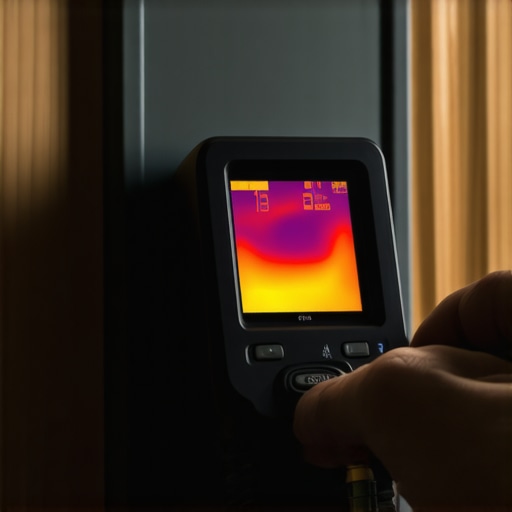
The most important maintenance task you can perform is a visual and thermal inspection twice a year. I use a pocket-sized thermal camera (like a FLIR One) to scan my panel while the car is pulling its full 40 or 48 amps. If I see a breaker glowing significantly brighter than its neighbors, I know I have a high-resistance connection that needs cleaning or tightening. You also need to keep an eye on the physical hardware. I’ve seen people let their cables sit in puddles or get run over, leading to internal fractures. Learning how to spot a dangerous heat build up in your ev charging cable before it melts the handle is a skill every EV owner needs. Also, don’t forget the software; I’ve fixed more ‘broken’ chargers by knowing how to update your charger software without calling a technician than by actually replacing parts.
Connectivity is another silent killer of the modern charging experience. If your charger loses its Wi-Fi signal, you might lose the ability to charge during off-peak hours, which can double your electric bill overnight. I spent a frustrating week troubleshooting ev charger connectivity problems only to realize my garage’s metal door was acting as a Faraday cage. A simple mesh Wi-Fi node in the garage solved everything. If you are managing multiple vehicles, you should look into the maintenance guide for commercial fleet charging stations for more robust strategies, even for a high-end home setup. According to NFPA 70B (Standard for Electrical Equipment Maintenance), electrical connections should be inspected and tested regularly to prevent the very failures that cause 25% of all large-scale electrical fires.
Your Panel is the Gateway to Future Energy Independence
Looking ahead, the upgrades you are doing now are just the beginning. We are moving toward a world where your car won’t just take power from your house—it will give it back. Vehicle-to-Home (V2H) technology is the next big wave, and it will require even stricter adherence to code compliance essentials for ev charger installations in 2025. If your panel is barely hanging on today, it certainly won’t handle the bidirectional flow of tomorrow. By investing in high-quality components and panel upgrade strategies to meet EV charging code requirements in 2025, you aren’t just charging a car; you’re future-proofing your home’s entire energy ecosystem. I strongly recommend you grab a thermal camera this weekend and do a quick scan of your panel while the car is charging; it’s the single most authoritative way to prove your system is safe.
Hard Truths from My Own Electrical Growing Pains
Reflecting on the dozens of hours I spent in my garage, I realized that the most expensive mistakes weren’t caused by the equipment—they were caused by my own assumptions. I used to think that ‘meeting code’ was just a box to check for the inspector. In reality, knowing how to pass your electrical inspection on the first visit is actually the baseline for keeping your house from burning down. Another lightbulb moment? The IRS isn’t your enemy if you have an itemized bill. If you want that tax credit, you have to be the advocate for your own project. Don’t let your electrician leave until you see ‘EV Infrastructure’ clearly labeled on every line item of that invoice.
- The 125% Rule is Non-Negotiable: Never let anyone tell you that a 40-amp charger is fine on a 40-amp breaker. This is a recipe for a thermal event.
- Documentation is a Financial Asset: Keep a digital folder of every permit, photo of the open panel, and receipt. It’s not just for taxes; it’s for your home’s resale value.
- Software Often Beats Hardware: Sometimes ev charger troubleshooting expert tips for common issues start with a simple firmware update, not a screwdriver.
The Gear That Keeps My Garage Safe
I don’t go near my electrical panel anymore without a few specific items that have saved me from thousands in repairs. First, get yourself a Wera Digital Torque Screwdriver. Manufacturers have very specific specs for a reason, and ‘hand-tight’ usually isn’t accurate enough for a continuous 48-amp load. Second, I highly recommend a FLIR One thermal camera. It’s an investment, but being able to see a hot breaker before it trips is worth every penny. Finally, keep a copy of the NFPA 70B handy if you really want to dive into the professional standards for electrical maintenance. If you’re still feeling unsure, it’s always better to contact us or a local pro to how to verify code compliance for your ev charger installation before you flip the switch.
#IMAGE_PLACEHOLDER_E#
Your Path to Total Energy Independence
Deciding to tackle a panel upgrade or install a high-speed charger is about more than just convenience. It’s about taking control of your home’s energy future. You are building the foundation for a home that is safer, smarter, and ready for whatever the next decade of technology brings. Don’t let the technical jargon or the paperwork scare you off. You’ve already done the hard part by educating yourself. Now, go out there, get those permits pulled, and enjoy the feeling of waking up to a full battery every single morning. Have you ever found a loose wire or a hot breaker during a routine check of your system? Let me know in the comments below!