I still remember the night I brought home my first high-performance EV. I had spent weeks obsessing over the paint color and the zero-to-sixty times, but I spent exactly thirty seconds thinking about the charger already bolted to my garage wall. I plugged it in, expecting that satisfying green glow, and instead, I got a blinking amber light and a car that refused to take a single kilowatt. It felt like trying to charge a smartphone with a potato. I quickly realized that just because the plug fits, it doesn’t mean the car and the charger are actually speaking the same language. If you have ever stood in your pajamas at 11 PM wondering why your ev charger light turns red every morning, you know exactly the frustration I’m talking about. Today, I want to pull back the curtain on the secret handshakes between your car and your charging station, so you can stop guessing and start actually fueling your commute.
Why Your Fancy New EV is Picking Fights with Your Charger
The truth is that Level 2 charging is not just a dumb pipe of electricity. It is a sophisticated digital conversation. When you plug in, your car’s Battery Management System (BMS) and the charger (technically called the EVSE) have to agree on exactly how much current to pull. Some car brands are notoriously picky. They expect a very specific signal frequency, and if the charger is even slightly off, the car will throttle the speed or shut down entirely to protect itself. I learned this the hard way when I tried to use a generic, budget-friendly charger on a brand that required a highly stable pilot signal. I ended up with a car that charged at half-speed because it didn’t trust the hardware on the wall. This is often where ev charger troubleshooting expert tips become your best friend, because half the time, the hardware is fine—the settings are just wrong. Beyond just the software, there is the physical reality of your home’s infrastructure. If your charger is trying to pull more than your house can give, you’re going to have a bad time. Before you blame the car, you really need to learn how to tell if your electrical panel can actually handle a level 2 charger. According to data from J.D. Power, nearly 20% of EV owners have experienced a charging failure at a public station, and home compatibility issues aren’t far behind when people mix and match low-end hardware with high-end vehicles. Have you ever noticed your charging speed suddenly drop for no apparent reason right in the middle of the night?
Will a different brand actually fry my battery?
This is the biggest fear I hear from my neighbors. They worry that if they don’t buy the charger made by their car’s manufacturer, they are going to wake up to a melted charging port or a dead battery. The short answer is: No, it won’t fry your battery. The standards like J1772 are designed with safety first, meaning the car won’t let the power flow if it detects a major mismatch. However, a poor pairing can lead to troubleshooting ev charger connectivity problems that make owning an EV feel like a chore rather than a luxury. I once saw a setup where a high-end European car constantly rejected a popular American charger simply because the grounding check on the charger was slightly more sensitive than the car expected. It wasn’t dangerous, but it was incredibly annoying. To avoid these headaches, we need to look at how these systems interact with your home’s main power supply and why your panel might be the invisible middleman causing all the drama.
Stop Treating Your Charger Like a Simple Toaster
To get your car and charger on the same page, you have to look at the stamina of your electrical system. Most homeowners just shove a new breaker into an open slot and assume the power will be there. I did exactly this during my first install, thinking my 100-amp service was a bottomless well. Halfway through a hot July afternoon, the AC kicked on, the car started pulling 40 amps, and my entire house went pitch black. It was a loud, expensive lesson in load management. Before you even touch a screwdriver, you need to learn how to calculate if your 100-amp service can handle a daily commute. If you are pushing the limits, you will need to understand how to balance your household loads to avoid tripping the main breaker so your refrigerator does not die just because you wanted a full battery by morning. 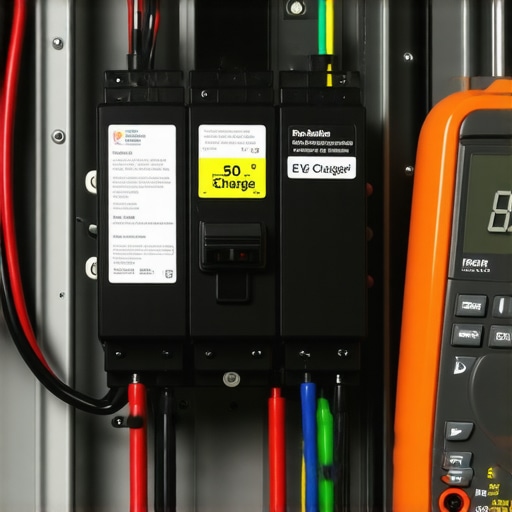
The Digital Handshake and Physical Health
Once the power supply is stable, the next step is ensuring the software is not the bottleneck. Just like your phone needs updates to work with new apps, your wallbox often needs a firmware refresh to recognize the latest communication protocols from new EV models. You can usually fix this yourself if you know how to update your charger software without calling a technician. However, even the best software cannot overcome a physical barrier. I once spent three hours debugging a communication error only to find a tiny layer of oxidation on the handle pins. It felt like trying to use a remote with dead batteries. Taking the time to learn how to clean the pins on your charging handle safely can resolve half of the connectivity headaches I see in the field.
Don’t Let Heat Kill Your Efficiency
Efficiency is not just about the speed of the electrons; it is about the temperature of the equipment. If your charging cable feels like a heating element, you have a problem. You must be able to spot a dangerous heat build-up in your ev charging cable before it causes the car to throttle the charge rate down to a crawl. This often stems from 3 common wire sizing errors that melt breakers during long charging sessions. If the wire is too thin for the distance it is traveling, it creates resistance, and resistance creates heat. It is the electrical equivalent of trying to push a gallon of water through a cocktail straw. Finally, keep your installation clean. It sounds like bureaucracy, but avoiding the working space violation that fails more ev panel inspections than anything else ensures that your components have enough airflow to stay cool. When you focus on ensuring code compliance when installing ev chargers, you are not just checking a box for the city—you are guaranteeing that the conversation between your car and your house remains a whisper instead of a shouting match.
The biggest myth in the EV world is that a panel upgrade is the magic wand that fixes every connectivity issue. I’ve seen homeowners drop five grand on a massive 200-amp service, only to find their charger still keeps cutting out at 2 AM. Everyone says you need more raw power, but in my experience, the infrastructure quality matters far more than the number on your main breaker. You could have a 400-amp commercial service, but if your installer missed the nuances of load balancing, you are still going to face issues. In fact, many older homes can actually skip the expensive overhaul if they use how to use a 100 amp panel for ev charging without a costly upgrade techniques like smart load shedding. The National Electrical Code (NEC) allows for these modern management systems because they realize raw capacity isn’t the only way to satisfy a hungry car battery.
The Invisible Mistake That Ruins Your Charging Performance
Here is the ‘oops’ factor that almost every DIYer and even some seasoned pros miss: the torque wrench. It sounds like a minor detail, but the forgotten torque spec that fails half of all panel inspections is the number one cause of heat-related failures. If a lug is even a fraction of an inch too loose, it creates micro-arcing. This won’t trip your breaker immediately, but it creates a massive amount of heat that slowly bakes the internal components of your charger. Before you know it, you’re looking at upgrading your panel for better ev charging performance all over again because your previous hardware literally melted from the inside out. A study by the Electric Power Research Institute (EPRI) found that thermal stress from poor connections is a leading cause of premature EVSE failure, often misdiagnosed as a ‘bad car battery’ or ‘faulty charger software.’
Why does your breaker trip only when the sun is out?
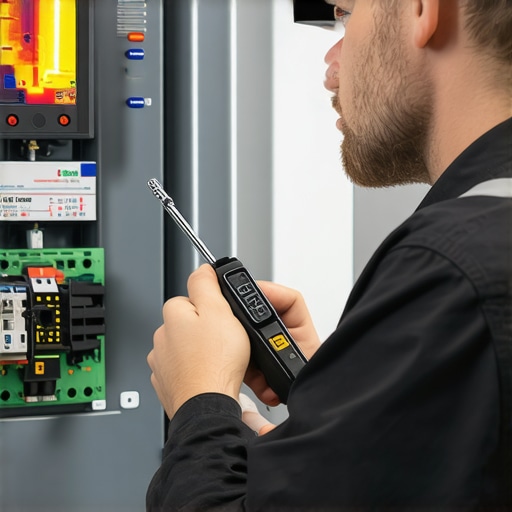
If you have ever wondered why your ev charger trips the breaker only on hot afternoons, you are witnessing thermal derating in real time. Breakers are thermal-magnetic devices. When your garage hits 100 degrees and your charger is pulling 40 amps for six hours straight, the breaker can’t shed heat fast enough. It’s not a short circuit; it’s the breaker protecting itself from its own environment. This is where panel upgrade strategies to meet ev charging code requirements in 2025 become vital. We are moving toward a standard where physical spacing and airflow around the charging breaker are just as important as the wire gauge itself. If you want to avoid these headaches, you have to learn how to pass your electrical inspection on the first visit by accounting for these thermal realities, not just the basic math on the permit application. Have you ever fallen into this trap where your setup worked fine in the winter but failed the moment summer hit? Let me know in the comments.
Keep Your Charger from Dying Young
I used to think that once the permit was signed and the car was charging, my job was done. I treated my charger like a refrigerator—something you plug in once and ignore for a decade. But after seeing a neighbor’s $600 wallbox literally melt its internal terminal block, I realized that “set it and forget it” is a dangerous myth. Scaling your home charging isn’t just about adding more power; it is about maintaining the integrity of the hardware you already have. If you start seeing strange errors, you should first look at ev charger troubleshooting expert tips to see if it’s a simple fix or a systemic failure. Often, it’s just a matter of keeping the digital brain of your unit sharp. I make it a point to check for updates every quarter; knowing how to update your charger software without calling a technician can prevent those annoying 2 AM “handshake” failures that leave you with an empty battery in the morning.
Why I Carry an Infrared Thermometer to the Garage
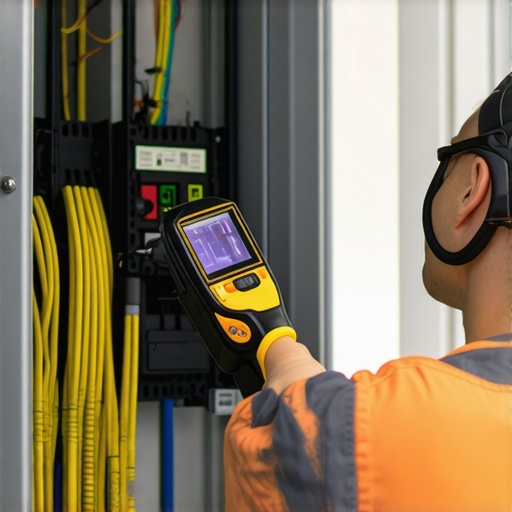
If you want to be a pro-level EV owner, buy a cheap infrared thermometer or a smartphone thermal camera. According to the NFPA 70B Standard for Electrical Equipment Maintenance, thermal anomalies are the primary indicators of impending electrical failure. Once a month, while my car is pulling its full 48-amp load, I scan the breaker and the charging handle. If I see a temperature spike that doesn’t make sense, I know I’m looking at potential troubleshooting ev charger connectivity problems caused by heat-induced resistance. It’s much cheaper to catch a loose wire now than to deal with what to do if your electrical panel smells like burning during ev charging later. This proactive scanning is especially important if you’ve recently done a upgrading your panel for better ev charging performance, as new connections can sometimes settle and loosen over time.
How do I keep my charging system healthy for the long haul?
Maintenance is mostly about cleanliness and tightness. Every few months, I check the pins on my J1772 handle. Dust and debris can get in there and cause arcing. Learning how to clean the pins on your charging handle safely is a five-minute task that can save your car’s expensive onboard charger. Beyond the handle, you need to revisit your panel. I’ve seen too many DIYers ignore the forgotten torque spec that fails half of all panel inspections. Copper expands and contracts with every charging cycle. If you don’t periodically ensure your connections are tight, you’re asking for a fire. As we look toward the future, I predict we will see “Smart Breakers” become the norm, which will handle this monitoring for us, but for now, the responsibility is on you. You’ll need to stay ahead of panel upgrade strategies to meet ev charging code requirements in 2025 as bidirectional charging (V2G) starts hitting the mainstream. For a truly bulletproof setup, I highly recommend doing a quick thermal sweep tonight while your car is charging—it’s the fastest way to spot a problem before it spots you. If you find anything suspicious, don’t wait; reach out to a professional to get it tightened down properly.
The Three Hardest Lessons From My Own Charging Journey
If there is one thing I’ve learned, it’s that your charger is a guest in your home’s electrical ecosystem, and guests need to follow the rules. First, never ignore a warm cable; resistance is the enemy of efficiency and safety. Second, software is just as important as copper. Keeping your firmware current is the easiest way to avoid troubleshooting ev charger connectivity problems that feel like a mystery. Finally, I’ve realized that a panel upgrade isn’t always about brute force capacity—it’s about the quality of the connections and ensuring code compliance when installing ev chargers to prevent future failures. It took me three separate visits from different technicians to realize that a simple loose lug was the reason my expensive station kept tripping. Use my frustration as your shortcut.
#IMAGE_PLACEHOLDER_E#
Tools Every EV Owner Should Keep in Their Glovebox
You don’t need a degree in electrical engineering to maintain your setup, but you do need the right references and a few simple gadgets. I swear by my infrared thermometer for monthly thermal checks while the car is pulling its maximum load. I also highly recommend bookmarking the official NFPA 70 guidelines or checking out code compliance essentials for ev charger installations in 2025 to stay ahead of changing local regulations. For those deeper technical dives when your app throws a cryptic code, troubleshooting ev chargers common compliance pitfalls and fixes has saved me hours of head-scratching when my car and charger decide to stop their digital handshake.
Your Path to a Stress-Free Charging Routine
Switching to an EV is supposed to be a step into a cleaner, more efficient future, not a source of nightly anxiety in your pajamas. By taking the time to verify your hardware and prioritizing code compliance, you are protecting your investment and your home. Don’t wait for a red light or a burning smell to take action. Whether you are planning a massive panel upgrade or just refining your current setup, doing it right the first time is the only way to truly enjoy the drive. If you ever feel overwhelmed by the technical specs or the math of load balancing, you can always reach out to a professional to help audit your system and give you total peace of mind. Have you ever had a charging session fail for a reason that completely surprised you? Let me know in the comments below!