It was 7:15 PM on a Tuesday, and I was just trying to get some laundry done while my new EV sipped on some juice in the garage. Suddenly, silence. Total, crushing darkness. My wife yelled from the kitchen because the oven went cold, and I was left standing in the dark, wondering if I’d just fried my expensive new toy. It wasn’t a blown fuse; I had managed to trip the main breaker for the entire house. Talk about an embarrassing “expert” moment. I realized then that I’d fallen into the same trap many homeowners do: I assumed my panel was a bottomless pit of power. It’s not. But the good news is, you don’t always need a sledgehammer and a five-figure check to fix it. [IMAGE_PLACEHOLDER]
Stop the Blackouts Before They Kill Your Evening
Many of us think that if we have a 100-amp or 200-amp service, we can just keep adding gadgets until the slots are full. But your electrical panel has a physical limit, and an EV charger is the equivalent of running three air conditioners at once. Today, I’m going to show you how to juggle these loads so you can charge your car and cook dinner at the same time without the lights going out. We’re going to look at how to calculate if your 100-amp service can actually handle the daily commute and what tweaks you can make to your schedule to keep the breaker happy. Have you ever had your house go completely dark right after you plugged in your car? It’s a heart-stopping moment, isn’t it? Let me know in the comments if you’ve been there!
Do I really need to spend five grand on a panel upgrade?
That’s the big fear, isn’t it? Every electrician you call probably mentions a full panel upgrade as the first solution. While sometimes it is necessary, I made the mistake early on of thinking bigger was the only way. I spent way too much on my first house because I didn’t understand load balancing. According to the U.S. Department of Energy, residential electricity use is expected to climb significantly as more people switch to electric heating and transportation, but our existing grids and home panels aren’t always ready. Often, ensuring code compliance is about more than just passing an inspection—it’s about keeping your family safe and your coffee pot running.
Why Your House is Fighting Your EV Charger
The real culprit is usually “diversity of load.” Your house assumes you aren’t using everything at once. But when charging happens overnight, and your heat pump kicks on at 3:00 AM, you hit that ceiling fast. I’ve seen homeowners ignore the scary buzzing sound your panel makes right before it gives up the ghost. If your main breaker runs hot during Level 2 charging, you aren’t just looking at a nuisance trip; you’re looking at wear and tear that can lead to a costly failure. We need to be realistic: most older homes were never designed for a continuous 40-amp draw for eight hours straight. It’s like asking a marathon runner to sprint while carrying a backpack full of bricks. In the next section, I’ll break down the exact steps I took to balance my own home, saving me from a total service overhaul and keeping my house bright during laundry night.First things first: you need to know exactly what your panel is currently eating before you add a massive new course to the menu. I remember standing in front of my gray metal box with a calculator, feeling like I was back in high school physics. I had a 100-amp service and thought I was fine until I realized my AC and water heater already claimed 60% of that capacity during peak hours. You need to calculate if your 100-amp service can actually handle a daily commute by looking at the nameplates of your biggest appliances. Subtract those from your main breaker’s total, and what’s left over is your charging budget. If you exceed 80% of your total capacity for more than three hours, you are asking for trouble. 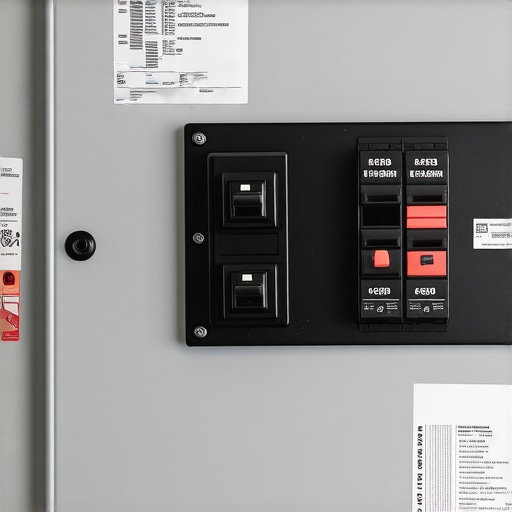
Downsize the Amperage Not the Car
If the math says you are over the limit, do not panic. You do not necessarily need an immediate upgrading your panel for better ev charging performance. Most modern Level 2 chargers allow you to throttle the output. I eventually dialed my charger back from 40 amps to 24 amps. Sure, it took two hours longer to get to a full charge, but it meant I did not have to worry about the main breaker running hot during Level 2 charging. It is like pouring water through a smaller funnel—it takes longer, but it does not overflow and soak your floor.
Stop Using That Dryer Outlet for Your Car
One of the biggest mistakes I made early on was relying on a NEMA 14-50 plug. It felt convenient, but I started hearing a faint buzzing. That scary buzzing sound your panel makes is often due to a loose connection or a breaker struggling with a continuous load it was not designed for. Moving to the benefit of a hardwired charger over a NEMA plug was a game-changer for me. Hardwiring creates a more secure, permanent connection that reduces heat and eliminates a potential point of failure.
Watch Out for These Code Violations
When you are DIY-ing or even hiring a pro, ensuring code compliance is non-negotiable. I once saw a neighbor try to save money by using undersized wire for a 50-amp circuit. Within a month, the insulation had started to discolor. These 3 common wire sizing errors that melt breakers are usually the result of people forgetting that EV charging is a continuous load. You need to size your wire for 125% of the charger’s output. If you ignore this, you are not just failing an inspection; you are inviting a thermal event into your garage.
The 2:00 AM Trick for Older Panels
If your panel is tight on space, use a smart charger to schedule your sessions. This is how I survived for a year on a cramped 100-amp panel. I set the car to start at 2:00 AM when the dishwasher was done and the AC was cycling less. This avoids the peak overlap that causes why your main breaker keeps tripping during overnight charging. It is the simplest way to how to use a 100-amp panel for ev charging without a costly upgrade while keeping everything safe and compliant.Most people think that a green ‘passed’ sticker from the local inspector means their installation is bulletproof. Here is the uncomfortable truth: code is the absolute minimum requirement to prevent your house from burning down. It is not a benchmark for long-term performance. I’ve seen countless DIYers and even some pros aim for the bare minimum, only to find their EV charger stops mid-session without throwing a code a month later. The hidden nuance here is thermal cycling. Every time your car pulls 40 amps, the copper wires heat up and expand; when it stops, they cool and contract. Over time, this ‘breathing’ can loosen connections that weren’t tightened to the exact manufacturer’s specifications.
The Hidden Danger of ‘Hand-Tight’ Connections
This brings me to the biggest ‘expert’ secret that most homeowners ignore: the torque screwdriver. Most people just tighten screws until they feel ‘snug,’ but the forgotten torque spec that fails half of all panel inspections is actually there for a reason. According to the Electrical Safety Foundation International (ESFI), loose connections are a leading cause of residential electrical fires because they create high-resistance points that generate heat without necessarily tripping a breaker. If you aren’t using a calibrated tool to hit that exact inch-pound rating on the breaker terminal, you’re just guessing with your home’s safety. Have you ever fallen into this trap of thinking ‘hand-tight’ was enough? Let me know in the comments. 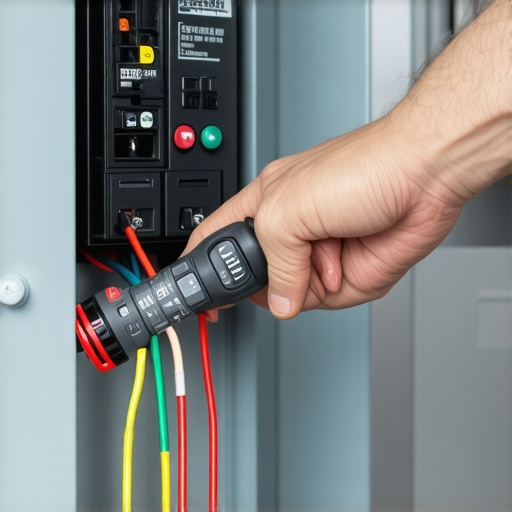
Why does the brand of my breaker matter if the amps are the same?
Not all breakers are created equal, even if they physically fit into the busbar slot. In my experience, the specific breaker brand that keeps tripping on Level 2 chargers often comes down to how the manufacturer handles internal heat dissipation. Some budget-friendly brands are notoriously sensitive to the ‘continuous load’ of an EV, which the NEC defines as any load running for three hours or more. When ev charger troubleshooting expert tips for common issues, I always suggest using an infrared thermometer to check the breaker temperature. If it is significantly hotter than the surrounding breakers, it might be a brand-specific sensitivity issue or a sign that the busbar connection itself is degrading.
The 30-Inch Clearance Rule You’re Probably Breaking
Another nuance people miss is the ‘working space’ requirement. I once visited a client who had a beautiful, custom-built shelving unit directly in front of his panel to hold his charging cables and gear. He was shocked when he had to tear it down to pass his electrical inspection on the first visit. You need a clear zone that is 30 inches wide and 36 inches deep in front of that panel. It’s not just for the inspector; it’s so a technician can move quickly if things go south. Furthermore, the working space violation that fails more ev panel inspections than anything else is often the result of homeowners treating their garage electrical area like a storage closet.
Avoid the Ghost in the Machine
Finally, watch out for the tiny neutral wire mistake that shuts down new ev charging circuits. Many high-end Level 2 chargers only require two hots and a ground, yet I see people trying to bond a neutral in ways that create parallel paths for current. This can confuse the GFCI sensors inside the charger, leading to those annoying red lights in the morning. When ensuring code compliance, remember that extra wires aren’t just a waste of money—they can actually introduce new points of failure if you don’t understand the specific grounding architecture of your charger. Stick to the manual, use a torque wrench, and stop treating the NEC like a suggestion. It’s the difference between a car that’s ready to go at 7:00 AM and a morning spent on the phone with an emergency electrician.Even if you get the wiring perfect, the job isn’t done the day the inspector leaves. I’ve learned that a ‘set it and forget it’ attitude is a recipe for a 3 AM emergency call. That’s why I’ve added a thermal imaging camera to my toolkit—specifically a FLIR attachment for my smartphone. It’s the single most important tool for ev charger troubleshooting expert tips for common issues. I use it to scan the panel after the car has been charging for an hour. If I see a glowing orange spot on one specific breaker terminal, I know I need to re-torque that connection before it becomes one of those scary noises your electrical panel makes. 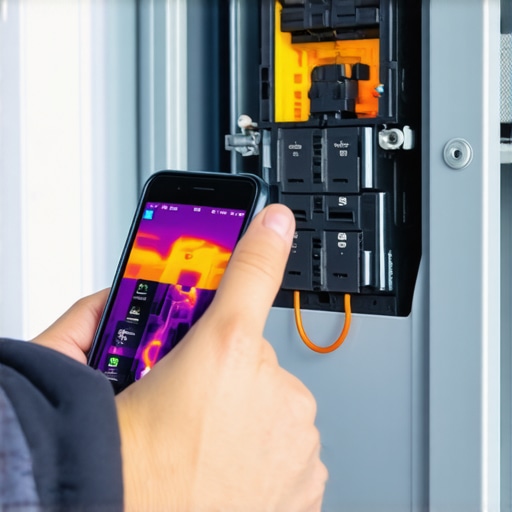
How do I maintain my electrical panel over time?
It’s not just about the panel; it’s about the entire circuit. Every six months, I do a physical walk-through. I check the charging handle for any signs of pitting or discoloration on the pins. If your charging handle feels hot to the touch, it’s often due to dirt or oxidation increasing resistance. I also recommend a ‘software Sunday’ once a quarter. Learn how to update your charger software without calling a technician to ensure your unit has the latest load-management algorithms. Most people don’t realize that troubleshooting ev charger connectivity problems is often the first step in preventing a hardware failure, as these updates often fix bugs that cause the internal contactors to chatter and wear out prematurely. According to the NFPA 70B (Standard for Electrical Equipment Maintenance), electrical connections should be inspected and tested periodically because vibration and thermal expansion are constant threats. Don’t assume that because it worked yesterday, it’s safe today. If you ever find that your electrical panel smells like burning during ev charging, stop everything immediately. That smell is the ozone and melting plastic of a connection that has already failed.
The Future of Home Energy is Bidirectional
We are standing on the edge of a massive shift. Within the next five years, your panel won’t just be a dumb box; it will be a traffic cop for a ‘microgrid.’ We are moving toward Vehicle-to-Home (V2H) technology where your EV acts as a backup battery for your house. This makes ensuring code compliance even more critical because the power will be flowing in both directions. If your grounding isn’t perfect now, V2H will find the flaw. My advice? Don’t wait for a failure. Go out to your garage tonight while the car is charging. If you don’t have a thermal camera, use the back of your hand (carefully!) to feel the face of the breakers. If one feels significantly hotter than the others, it’s time to grab your torque screwdriver and verify those specs. It takes five minutes and could save you a five-figure panel replacement. Have you checked your breaker temperatures lately? Grab a cheap infrared thermometer and post your readings in the comments—I’d love to see what your ‘normal’ looks like!
Hard Truths from a Decade of Fried Breakers
Reflecting on my own journey, the biggest lesson wasn’t about the car—it was about the infrastructure. I’ve learned that a visual check isn’t an inspection. Just because the lights are on doesn’t mean the wires aren’t crying for help. Ensuring code compliance isn’t just about red tape; it’s about physical safety. I once thought I could skip the torque wrench, only to find a melted terminal two months later. It’s a mistake you only make once. Also, never underestimate the power of a thermal scan. When you are doing ev charger troubleshooting expert tips for common issues, your eyes can lie, but heat signatures always tell the truth. Lastly, don’t wait for the ‘burning smell’ to take action; a proactive check of your breaker’s temperature can save you thousands in repair costs.
[IMAGE_PLACEHOLDER]
The Essential Gear for Your Garage Workbench
If you’re serious about maintaining your setup, you need more than just a standard toolbox. I personally swear by these three items. First, a high-quality torque screwdriver; it is the only way to satisfy the forgotten torque spec that fails half of all panel inspections. Second, a digital multimeter for checking voltage drops across your circuit. Third, keep your smartphone ready for updates. Learning how to update your charger software without calling a technician ensures you have the latest safety patches and efficiency algorithms. I also highly recommend keeping a copy of the NFPA 70 handbook nearby—it’s the ultimate guide for any homeowner looking to truly understand their home’s electrical skeleton.
Taking Control of Your Home Power Grid
Transitioning to electric driving is a major milestone, and while the learning curve can feel steep, you are now equipped to handle it like a pro. By paying attention to the nuances of heat, torque, and load timing, you’re doing more than just charging a car—you’re upgrading your home’s reliability. Whether you are dealing with minor troubleshooting ev charger connectivity problems or planning a future upgrading your panel for better ev charging performance, your new knowledge keeps your family safe and your commute seamless. If you ever feel in over your head, don’t hesitate to contact us for expert guidance. You’ve got this! Have you ever noticed your panel making a faint humming noise while your car is plugged in, or has it been silent since day one? Let’s swap stories in the comments below!