I was standing in my driveway at 11:30 PM, the kind of quiet night where you can hear the crickets from three blocks away, but all I could hear was the frantic clicking of a relay and the digital silence of my smartphone app. My car was plugged in. My solar panels had spent the whole day soaking up the California sun. Yet, for some reason, the “Smart” part of my charger was acting like a brick. It just wouldn’t connect. I felt like a failure. I’d spent thousands on this setup, promising my spouse that we’d never pay for juice again, only to find myself staring at a “No Signal” icon. This isn’t just about a bad app; it’s about a breakdown in communication that keeps you from the energy independence you were promised. Today, I’m going to share exactly how I navigated this mess so you don’t have to waste your Saturday morning on hold with technical support.
My Frustrating Battle With The Sun and The Plug
I made a classic rookie mistake early on. I assumed that because both my inverter and my charger had Wi-Fi, they would naturally want to be best friends. I even went out and bought a high-gain antenna, thinking it was just a weak signal. Spoiler alert: it wasn’t. The real culprit was a settings mismatch in the data protocol that I didn’t even know existed. If you are struggling with connectivity problems between your charger and your home network, you aren’t alone. It’s a common hurdle that most manuals gloss over. We’re going to look at why these “handshakes” fail and how you can force them to cooperate. According to the National Renewable Energy Laboratory, integrating home energy systems requires precise synchronization to maximize efficiency, a process often hampered by proprietary software silos that don’t play nice with one another. I spent three days digging through forums before I realized my charger was trying to talk to the grid instead of my local solar buffer.
Is Solar-Optimized Charging Actually Worth the Headache?
I get it. You’re probably wondering if you should just set a manual timer and call it a day. But if you don’t get the smart communication right, you’re missing out on the “excess solar” feature—the holy grail where your car only charges when your panels are producing more than the house needs. Without it, you might find that your smart charger isn’t actually saving you money because it’s pulling from the grid during peak hours. Trust me, once you see that “Charging from PV” notification for the first time, the effort feels worth it. Have you ever stared at your charger’s blinking light and felt like it was mocking you? If you’re currently stuck in “Waiting for Power” limbo, reach out to us here and let’s get it sorted. Before we dive into the technical bits, we need to address the elephant in the room: the truth about solar-powered Level 2 stations is that they require a level of electrical harmony that your standard toaster just doesn’t demand.
Split Your Wi-Fi Bands to Save Your Sanity
Most modern smart chargers are picky eaters when it comes to internet signals. They usually only want the 2.4GHz band, while your fancy new smartphone is hunting for 5GHz. I spent hours watching my connection drop every time I walked into the garage until I realized my mesh router was trying to force the charger into a higher frequency it couldn’t handle. The fix is simple: create a dedicated guest network specifically for your energy hardware that only uses the 2.4GHz band. If you are still seeing drops, you likely need to learn how to update the firmware on your smart charging station manually via a USB port or a direct Bluetooth link. Think of it like a translator; if the charger’s software is out of date, it literally forgets how to talk to your router. 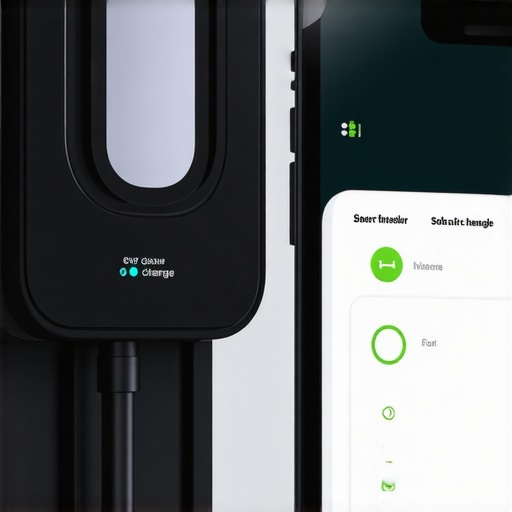
Align Your Data Protocols for True Energy Independence
To get your car to charge only when the sun is out, your inverter and charger need to agree on a data protocol, usually something called Modbus or OCPP. I remember standing in my garage with a multimeter, feeling completely defeated because my ‘smart’ system was drawing power from the grid at 2:00 PM despite a cloudless sky. It turned out the CT clamps—those little sensors that clip onto your main power lines—were installed backward. They thought the house was exporting power when it was actually importing. If your system is confused, you might need to how to load balance your home electrical system without a full panel swap by recalibrating those sensors through the installer menu. It is like a handshake; if one person is squeezing too hard, the whole deal falls apart.
Why You Must Check Your Torque Settings Immediately
Heat is the enemy of connectivity. If your wires are even slightly loose, they create resistance. Resistance creates heat, and heat causes the smart sensors in your charger to throttle the speed or shut down the connection entirely to prevent a fire. I once found a terminal screw that was just a quarter-turn loose, and it was enough to make the charger drop the Wi-Fi signal every time the current hit 40 amps. This is why pros obsess over the specific torque settings that prevent panel fires during high-load charging. It’s not just about safety; it’s about signal integrity. A vibrating, humming breaker is a sign of trouble, so if you notice why your main breaker hums when the EV is plugged in, you need to shut it down and tighten those lugs before you lose your hardware.
Verify Your Hardware Specs Before the Heavy Lifting
You can have the smartest software in the world, but if the physical ‘pipes’ are too small, the system will fail. I’ve seen homeowners try to run a high-end solar-integrated charger on thin wiring that just wasn’t up to the task. You must ensure you have the exact wire gauge you need for a 50-amp EV circuit to maintain a stable voltage. If the voltage drops too low because the wire is struggling, the charger’s computer will often reboot, causing that dreaded ‘No Signal’ error on your phone. If your current setup is pushing your home to the limit, you should look into panel upgrades for EV chargers to give your ‘smart’ home the actual muscle it needs to stay connected and efficient.Even with the right wires in place, there is a hidden layer of complexity most people miss. Most homeowners assume that if an inspector signs off on their garage, the job is perfect. But let’s be honest: ensuring code compliance when installing EV chargers is the bare minimum for safety, not a guarantee of peak performance. I’ve seen dozens of setups that were technically legal but thermally inefficient, leading to those mysterious connection drops I mentioned earlier. If you want a system that actually lasts a decade, you have to look past the inspection sticker.
The Massive Gap Between Minimum Code and Peak Performance
In my experience, the biggest lie in the industry is that you always need a 200-amp service to charge a modern car. I’ve had contractors tell my clients they need a $4,000 upgrade before even looking at the current load. In reality, you can often use load balancing to manage your home electrical system without a full panel swap. By using a smart sensor that talks to your charger, you can tell the car to slow down only when the dryer and oven are running. Everyone says ‘more power is better,’ but I argue that ‘smarter power’ is cheaper and just as effective. However, the one place you should never go cheap is the physical outlet itself. 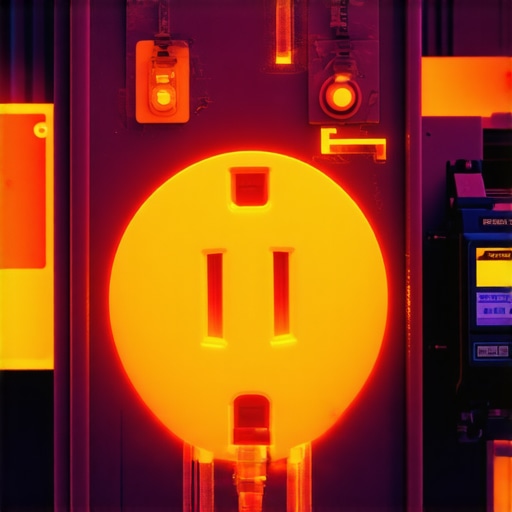
Avoid the Meltdown by Skipping the Cheap Outlets
Here is the ‘oops’ factor that ruins most Saturday mornings: using a $10 NEMA 14-50 outlet designed for a kitchen range. A stove is on for thirty minutes; an EV charger pulls max current for eight hours straight. I have seen those cheap plastic housings melt into a puddle because they weren’t rated for continuous high-draw cycles. You must learn how to pick a NEMA 14-50 outlet that won’t melt under pressure by looking for industrial-grade components. This is also where you’ll find the hidden danger of loose neutral wires in your electrical panel. If that neutral wire isn’t seated perfectly, the resulting heat won’t just trip your breaker—it can fry the sensitive communication board in your ‘smart’ charger. According to a study by the Electrical Safety Foundation International (ESFI), nearly 20% of home electrical fires are linked to improper circuit loading or aged components, a risk that significantly increases when you add the sustained load of a Level 2 station.
Why Does Your Charging Speed Drop the Moment the AC Kicks On?
If you’ve noticed your car suddenly takes twice as long to charge in the middle of a heatwave, you aren’t imagining it. This isn’t usually an internet problem; it’s a thermal management issue. Most people think why your charging speed drops by half when the sun goes down is related to solar production, but often it’s because the ambient temperature in your garage has hit a threshold. The charger’s internal computer sees the heat rising and throttles the amperage to protect its circuits. It is a protective measure, but it’s frustrating when you need a full battery by morning. Have you ever fallen into this trap of assuming it was a software bug when it was actually a heat issue? Let me know in the comments if your charger has ever ‘decided’ to slow down on its own. If you’re tired of guessing, it might be time to look into upgrading your panel for better EV charging performance to ensure you have the thermal headroom to charge at full speed even when the garage is 100 degrees.
The Two Tools That Keep My Garage From Melting
I used to think that once the charger was on the wall, my work was done. I was wrong. If you want your system to last as long as your car, you need to treat it like any other high-performance appliance. I personally keep a digital infrared thermometer in my toolbox. Once a month, while the car is pulling its full 48 amps, I point that red laser at the breaker and the outlet. If I see anything over 140 degrees Fahrenheit, I know a connection is loosening or the hardware is starting to fail. According to the NFPA 70B Recommended Practice for Electrical Equipment Maintenance, thermal variations are the primary indicator of impending component failure in high-load systems. It takes thirty seconds and saves me from a $500 emergency call-out.
How Do I Maintain My Home Charging Setup Over Time?
Beyond the internal electronics, the physical hardware takes a beating from the elements and constant mechanical stress. I’ve made it a habit to check the handle every few months. If you find the plug is getting harder to pull out, you need to learn how to stop your charger handle from sticking in the port before you snap a plastic locking pin. Similarly, those metal contacts inside the handle can build up a thin layer of oxidation that increases resistance. Knowing how to clean the pins on your charging handle safely can prevent your car from throwing a ‘Check Charger’ error. I also recommend checking for software updates once a quarter. Even if your app doesn’t nag you, manually checking how to update the firmware on your smart charging station can resolve handshake bugs that cause that frustrating ‘Waiting for Power’ loop. 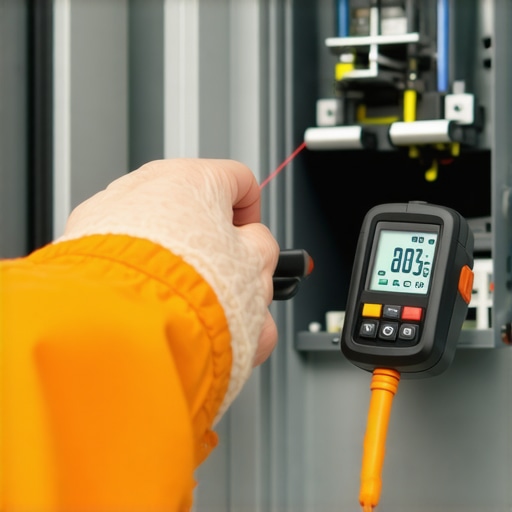
Stop Guessing and Start Future-Proofing Your Panel
The trend I’m seeing in the EV community is that one electric vehicle quickly becomes two. If you are already looking at a full panel, don’t just slap a second charger on and hope for the best. You need to think about how to upgrade your homes service for dual ev charging without breaking the bank. The electrical codes in 2025 are getting much stricter about load calculations, and we are seeing a major shift toward panel upgrade strategies to meet EV charging code requirements in 2025 that prioritize smart energy management over raw amperage. In the next five years, the ‘dumb’ 50-amp circuit will likely be obsolete, replaced by managed load systems that treat your car, heat pump, and HVAC like a single, fluid organism. If you are doing an upgrade now, ensure you know how to verify code compliance for your ev charger installation to avoid having a city inspector tell you to rip it all out. My best advice is to review panel upgrades for EV chargers with a pro who actually understands EVs, not just general wiring. Try this tonight: After your car has been charging for an hour, go out and listen to your panel. If you hear a distinct hum or feel heat radiating through the cover, your system is crying out for a professional inspection.
Hard Truths About the ‘Set It and Forget It’ Charging Myth
I spent months chasing phantom software glitches only to realize my physical installation was the real bottleneck. One of the biggest lessons I learned is that thermal management is just as important as your Wi-Fi signal strength. If your breaker feels like a warm cup of coffee, your connectivity will suffer long before a fire starts. I also discovered that ensuring code compliance when installing EV chargers isn’t just about satisfying a city inspector; it is about building a foundation that won’t fail during a mid-August heatwave. Remember, a ‘smart’ charger is only as intelligent as the data it receives from properly calibrated sensors. If you ignore the physical basics, even the best app in the world can’t save your charging schedule. #IMAGE_PLACEHOLDER_E#
My Personal Toolkit for a Bulletproof Garage Setup
To keep my system running without a hitch, I rely on a few specific resources and tools that moved me from frustration to total control. First, I highly recommend keeping a digital infrared thermometer in your glovebox to spot loose connections before they melt. Second, bookmark a reliable guide for expert tips for common issues so you aren’t digging through conflicting forum advice at midnight. For those looking ahead, you must understand panel upgrade strategies to meet EV charging code requirements in 2025, as the electrical landscape is shifting toward managed loads. Lastly, always verify your installer used the specific torque settings that prevent panel fires—this single step is the difference between a decade of service and a costly emergency repair.
Finally Claim Your Energy Freedom
You have navigated the messy world of Wi-Fi bands, sensor calibrations, and electrical limits. By mastering EV charger troubleshooting, you’re doing more than just fueling a vehicle; you’re managing a sophisticated home power plant. Don’t let the technical hurdles discourage you. The first time you see your car charging purely on ‘excess solar,’ the effort will feel entirely worth it. Take control of your garage, respect the wires, and enjoy the silence of a perfectly functioning system. Have you ever had a charger ‘ghost’ you right before a long trip, or did you find a loose wire that solved a mystery? Let me know in the comments below!