I was standing in my garage at 11:30 PM last Tuesday, clutching a lukewarm cup of coffee, when I finally heard it. Click. The charger engaged, and then, a low, rhythmic thrum began vibrating from the wall. It wasn’t the car’s cooling fan. It was my main electrical breaker. My heart did a little skip, the same way it does when you see blue lights in your rearview mirror. I had just finished my DIY installation, feeling pretty proud of myself, only to realize my panel was literally screaming for help. That noise is a visceral reminder that while your EV is sleek and silent, the electricity fueling it is a raw, physical force. Today, I am going to help you decode that vibration so you can stop worrying and start charging safely. We are going to look at whether you need to be upgrading your panel for better ev charging performance or if it is just a simple fix involving a screwdriver and some patience. Have you ever stood in your dark garage and wondered if those 3 scary noises your electrical panel makes when charging an ev were actually normal? Let me know in the comments, because I have been exactly where you are.
Your Breaker Shouldn’t Sound Like a Beehive
I used to think a little noise was just part of the deal. I made the mistake of ignoring a subtle hum for nearly a month, assuming it was just ‘the load’ doing its thing. It wasn’t until I noticed the plastic around the casing was slightly discolored that I realized how close I came to a melt-down. When you pull 40 or 50 amps for hours on end, any tiny imperfection in your gear gets magnified. A hum is usually just a vibration, but it is a vibration caused by a physical struggle. According to the Electrical Safety Foundation International, thousands of home fires are caused by electrical distribution systems every year, and high-continuous loads like an EV charger are the ultimate stress test for any aging breaker. You might be seeing 3 signs your main breaker is running dangerously hot without even knowing it. Usually, that sound is caused by the magnetic fields generated by high current flow, which can actually cause loose internal components or even the breaker itself to vibrate against the busbar. It is especially common if you have the specific breaker brand that keeps tripping on level 2 chargers which often suffer from poor seating.
Is my house actually going to catch fire tonight?
I know that is the big fear. You hear a buzz and you immediately think of 911. The truth is, while a humming breaker is a warning, it is rarely an instant catastrophe. It is a signal that your system is working harder than it likes. Often, the culprit is the hidden danger of loose neutral wires or a breaker that isn’t snapped tightly onto the busbar. When I finally called my buddy who’s a master sparky, he showed me how a single quarter-turn of a terminal screw could silence the whole thing. But if you ignore it, that vibration leads to heat, and heat leads to arcing. We are going to walk through how to diagnose this without losing your mind—or your house.
Tighten those terminals like your house depends on it
I learned the hard way that ‘finger tight’ is a recipe for a fire. Last summer, I thought I’d fixed my humming issue by just nudging the breaker. Two weeks later, I smelled ozone. When I finally took a torque screwdriver to the lugs, I found the main feed was barely making contact. High-amperage draws cause metal to expand and contract; over time, that movement creates a gap. That gap creates an arc, and that arc creates the buzz. Before you assume you need a total replacement, shut off the main power and check for the hidden danger of loose neutral wires. If those connections aren’t torqued to the manufacturer’s specific inch-pounds, you are inviting heat. I once spent three hours chasing a ghost in a garage sub-panel only to find that a single lug on the busbar was just half a turn loose. Once tightened, the silence was immediate and honestly, a bit of a relief.
Check for the dreaded voltage drop
If your lights flicker the second the car starts drawing juice, you might be dealing with the common wire sizing error that causes voltage drops during charging. It’s like trying to push a gallon of water through a straw—the friction creates heat and noise. If your wire gauge is too small for the distance between the panel and the charger, the resistance climbs. This resistance makes the breaker work harder, leading to that vibration you’re hearing. 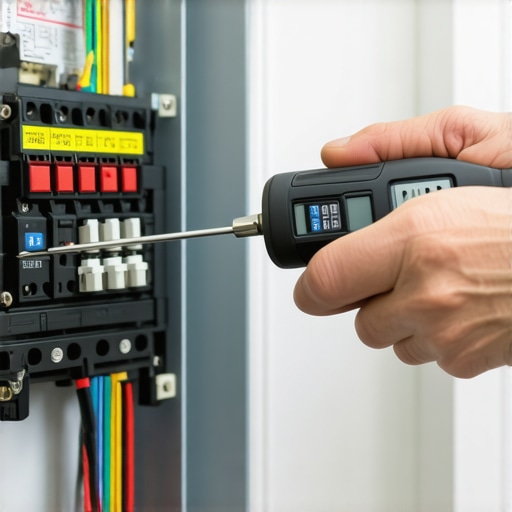
Balance the load so your panel can breathe
Most of us aren’t living with 400-amp industrial service. We are squeezing a 50-amp car charger into a 200-amp (or heaven forbid, a 100-amp) panel that’s already running a dryer, an AC, and an electric oven. When the hum gets louder, it’s often because you’re pushing the limits of your total service capacity. You need to learn how to load balance your home electrical system without a full panel swap. I managed to stop my main breaker from screaming by simply scheduling my car to charge at 2:00 AM when the rest of the house was ‘asleep.’ If you try to fast-charge while the dishwasher and the HVAC are humming, you’re asking the main breaker to sit at its thermal limit for hours. That’s not just noisy; it’s aging your equipment at 10x the normal rate.
Labels and logic keep the inspector happy
If you’ve done the work yourself or hired a ‘handyman,’ you might have skipped the boring stuff, but the boring stuff keeps you safe. Ensure you have the specific circuit labels required by the electrical inspector clearly visible. It sounds like a minor detail, but clear labeling helps you identify exactly which circuit is failing if things go south. When I had my first official walkthrough, the inspector didn’t even look at the charger first; he looked at the panel schedule. Knowing how to pass your electrical inspection on the first visit often comes down to these small, physical details. If your panel looks like a bird’s nest of wires, it’s harder to spot the heat-damaged insulation that usually accompanies a vibrating breaker. Look for panel upgrades for ev chargers what you need to know if you find that your current box is simply too crowded to manage the heat.
Stop overpaying for panel upgrades you don’t need
Most homeowners believe that if their main breaker is only rated for 100 amps, they are stuck with a slow, overnight trickle. I have seen people drop $4,000 on a service upgrade before even plugging in their car. Here is a contrarian take: you probably do not need it. In my experience, focusing on smart load management is far more efficient than just throwing more copper at the problem. You can learn how to add an ev charger to a home with a small 60 amp panel by using a simple energy management system that pauses the car’s draw when the AC kicks on. This avoids the ‘brute force’ approach of a full swap while keeping everything within legal limits. This is where upgrading your panel for better ev charging performance becomes a choice rather than a mandatory tax on your EV ownership.
The gas meter mistake that costs you double
One of the biggest ‘oops’ factors I see—especially with DIYers who are proud of their conduit bending—is the placement of the station itself. I once watched a neighbor spend a whole weekend running 1-inch EMT, only to have the city inspector fail him in thirty seconds because of a clearance issue. You must respect the exact distance your charger must be from the gas meter. If you are within that three-foot ‘no-spark’ zone, your installation is a code violation and a potential fire hazard. 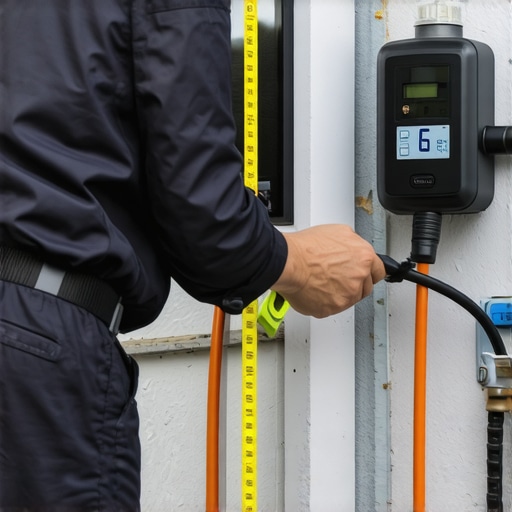
Why did my high-end charger still fail the inspector?
Even if your wiring is perfect, you might get tripped up by the 2023 National Electrical Code (NEC) updates. A common advanced mistake is the choice between a plug-in and a hardwired unit. While the ‘big box’ stores sell 14-50 NEMA outlets like candy, I always advocate for the benefit of a hardwired charger over a nema plug. Why? Because the NEC often requires GFCI protection for outlets in garages, but many EV chargers have internal GFCI that ‘clashes’ with the breaker, causing endless nuisance trips. According to the NFPA 70 (National Electrical Code), these overlapping safety measures can lead to system instability and frequent charger resets. If you hardwire the unit, you usually bypass this headache and create a much more robust connection. Before you start drilling, make sure you know how to verify code compliance for your ev charger installation to avoid doing the work twice. If you’ve been searching for ev charger troubleshooting expert tips for common issues, the answer is often found in the code book, not just the user manual. Have you ever fallen into this ‘compliance trap’ or had an inspector find a tiny detail you missed? Let me know in the comments.The one tool that absolutely saved my peace of mind—and probably my house—wasn’t a high-end multimeter, but a calibrated torque screwdriver. I used to think ‘hand-tight’ was a universal measurement until I read the NFPA 70 (National Electrical Code) Section 110.14(D), which explicitly requires the use of a calibrated torque tool where a tightening torque is indicated on the equipment. Most EV breakers specify somewhere around 25 to 45 inch-pounds. If you’re off by even 10%, you’re risking a high-resistance connection that leads to heat. If you’ve been doing this by feel, you’re essentially gambling with your panel’s lifespan. I recommend checking your terminals every six months for the first year, as thermal cycling can cause wires to ‘creep’ or settle. It’s a simple ten-minute task that prevents you from ever having to search for ev charger troubleshooting expert tips for common issues caused by melted plastic. 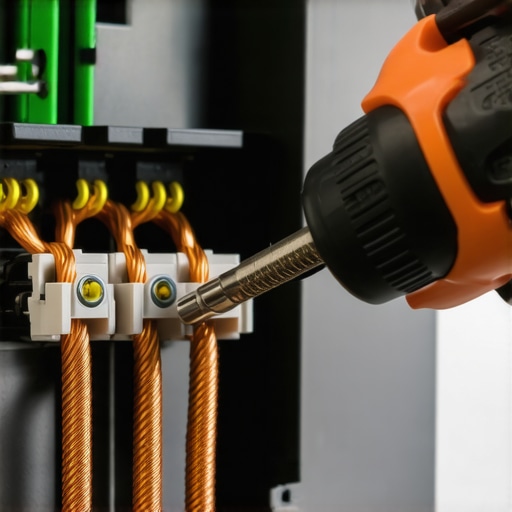
Thermal cameras are the ultimate cheat code
I started carrying a small FLIR attachment for my smartphone, and it’s like having X-ray vision for electricity. After a two-hour charging session, I’ll pop the dead front off the panel and scan the breakers. If I see a bright purple or white ‘hot spot’ at a terminal, I know I have a loose connection or a failing breaker before I can even smell the ozone. This is the pro-level way of how to spot a dangerous heat build-up in your ev charging cable or the internal panel components. If you see temperatures exceeding 60-75°C on your main breaker, you’re in the danger zone. Most people wait for a pop or a flicker; I prefer to see the heat coming.
How do I keep my EV charging station safe for years?
Maintenance isn’t just about the heavy metal in the wall; it’s about the handle you touch every morning. I make it a habit to look into the ‘nozzle’ every few months to check for debris or burnt pins. Learning how to clean the pins on your charging handle safely can prevent communication errors that make your car refuse to charge. Additionally, don’t ignore the digital side. Many modern chargers are essentially computers on your wall. Knowing how to update your charger software without calling a technician is crucial because manufacturers often release firmware patches that improve thermal management and solve connectivity bugs.
Your car might power your house by 2026
Looking forward, the biggest shift I see is the move toward bidirectional charging (V2H). We are moving away from the car being a ‘drain’ on the house and toward it being a backup battery. This will require even more robust panel upgrade strategies to meet ev charging code requirements in 2025. You won’t just be pushing 40 amps to the car; you’ll be pulling it from the car during a power outage. If your panel is vibrating now just from charging, it’s definitely not ready for the two-way street of the future. Staying ahead of ensuring code compliance when installing ev chargers today means your system will be resilient enough for the tech of tomorrow. My best advice? Grab a torque driver tonight and verify those connections; it’s the single most effective thing you can do to prevent a middle-of-the-night emergency.
The invisible wear and tear I did not see coming
The biggest lightbulb moment for me was realizing that electricity is not just a digital signal; it is a physical weight. When you are pushing 40 or 50 amps through a breaker for eight hours straight, you are essentially putting your electrical system through a marathon every single night. I learned that copper creep is a very real phenomenon where heat causes wires to slightly expand and contract, eventually loosening the very screws you thought were tight. If I had known this three years ago, I would have checked my terminals long before the buzzing started. Most people assume that if the lights are on, everything is fine, but ev charger troubleshooting expert tips for common issues often start with physical inspections, not digital error codes. It is also worth noting that just because a breaker is rated for 50 amps doesn’t mean it should run at 50 amps continuously; the 80% rule is your best friend for longevity.
The non-negotiables for my garage workshop
If you want to move beyond guessing and start managing your home like a pro, there are three things I keep within arm’s reach. First, a calibrated torque screwdriver. You cannot accurately hit 30 inch-pounds by feel, and your house’s safety depends on that specific pressure. Second, a smartphone-compatible thermal camera. It is the only way to catch troubleshooting ev chargers common compliance pitfalls and fixes before they become charred plastic. Finally, I always keep a digital copy of my local utility’s rebate requirements. Often, you can get the city to pay for a portion of your panel upgrades for ev chargers what you need to know if you follow their specific guidelines from day one. I trust these tools because they remove the ‘maybe’ from my electrical maintenance.
Your garage is the gas station of the future
It is easy to feel overwhelmed by the humming and the technical jargon, but remember that you are pioneering a massive shift in how we live. By taking the time to understand how to verify code compliance for your ev charger installation, you are doing more than just stopping a noise; you are building a resilient home infrastructure. Your electrical panel is the heart of your home, and with a little bit of proactive care and the right torque settings, it will keep your car and your family safe for decades. Do not be afraid to open that panel door and take a look; knowledge is the best fire prevention. Have you ever noticed your main breaker feeling warm to the touch after a long charging session? Let me know in the comments so we can figure it out together.