The smell of ozone and the sight of twenty delivery drivers standing around drinking cold coffee is a sight I never want to see again. It was my second year in the business, and I’d convinced a local logistics manager that their new EV fleet would be a ‘set it and forget it’ situation. I was wrong. Dead wrong. One loose connection in the main panel and a dusty intake vent on a high-speed charger brought their entire morning route to a screeching halt. That morning, I didn’t just fix a charger; I learned that commercial hardware is a beast that needs constant, gentle taming. If you are responsible for keeping a fleet juiced up, you know that a single blinking red light on a Tuesday morning can cost you thousands in missed deliveries and angry customers. We are going to dive into how to keep those stations humming so you never have to make that 5:00 AM apology call.
Stop Treating Your Commercial Chargers Like Simple Household Toasters
Most people think that because they plug in their phone every night without a problem, a fleet of thirty electric vans will be just as easy. It’s not. These systems pull massive amounts of current for hours on end, creating heat and stress that residential units never see. Early in my career, I made the mistake of ignoring the forgotten torque specs on the terminal blocks, thinking ‘hand-tight’ was good enough for a 480V system. It wasn’t. Vibration and thermal expansion eventually loosened those wires, causing a meltdown that was entirely preventable. According to data from the National Renewable Energy Laboratory (NREL), charging infrastructure reliability is often hampered by component failures that could be identified through routine thermal inspections and software updates. It’s not just about the hardware either; you have to stay on top of ensuring code compliance to avoid legal headaches if something does go wrong. Have you ever walked out to your depot and found a charger completely unresponsive for no apparent reason?
Do these expensive maintenance plans really save money?
I get the skepticism. When a technician quotes you a monthly fee just to ‘look’ at things that seem to be working fine, it feels like a shakedown. But here is the reality: a commercial charger is a computer that lives outside in the rain, heat, and snow. Between troubleshooting connectivity problems caused by firmware bugs and catching smart charger app disconnects, the ‘invisible’ work is what keeps the fleet moving. If you wait for the ‘Service Required’ light, you’ve already lost. We’re going to look at the specific steps to identify common compliance pitfalls and fixes before the inspector—or a fire—does it for you.You can’t just eyeball a 480V connection and know if it’s healthy. Commercial chargers are essentially massive heat sinks that move incredible amounts of energy. If you feel a charging handle during a session and it’s pulsing, or if the real reason your charging handle feels hot to the touch is anything other than ambient weather temperature, you have a looming failure. I’ve seen cables that look factory-perfect on the outside while the internal strands are literally cooking under the insulation. Every fleet manager needs to train their team on how to spot a dangerous heat build-up in your EV charging cable before the material becomes brittle and exposes live copper to a driver’s hand. I once saw a delivery driver ignore a ‘warm’ cable for a double shift; by the time he tried to unplug, the plastic had softened enough that the port and the handle were fused together, sidelining a $60,000 van for three days. 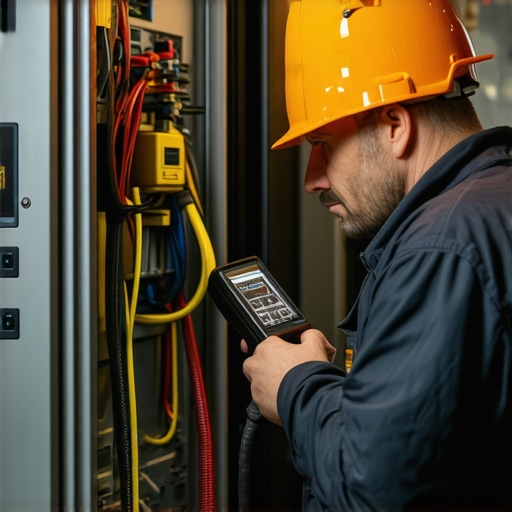
Why Torque Specs Save More Than Just Your Reputation
Thermal expansion is the silent killer of heavy-duty electrical infrastructure. When that much current flows, the metal inside your breakers and terminals expands. When the sun goes down or the charging stops, it contracts. Over hundreds of cycles, those ‘hand-tight’ screws back out just a fraction of a millimeter. This is exactly why the forgotten torque spec that fails half of all panel inspections is the most critical number in your maintenance manual. If those connections aren’t torqued to the manufacturer’s exact inch-pound rating using a calibrated tool, you are creating high-resistance points. High resistance creates more heat, which causes more expansion—it’s a physical feedback loop that eventually leads to a charred breaker and a dead station.
Grounding Errors That Can Cost You Five Figures
A lot of fleet managers skip the deep dive into their infrastructure, assuming if the lights are on, the power is clean. But panel upgrades for EV chargers what you need to know often involve more than just adding a bigger breaker; they require a pristine path to ground. I remember a depot in Jersey where three brand-new stations went dark after a minor summer storm. It wasn’t a direct lightning strike; we found that the installer had missed a single bonding screw in the sub-panel. These 3 grounding errors that kill EV charger motherboards before they are a year old are almost always the result of rushing the final steps. That one missed screw cost the company $15,000 in replacement motherboards that were not covered by warranty because the damage was classified as an installation error rather than a part failure.
Defeat Digital Gremlins Without a Support Call
Stop waiting for the manufacturer to send a technician for every ‘Network Error’ that pops up on the screen. Most connectivity issues are just the result of outdated firmware struggling to complete a digital handshake with a new vehicle model or a recent cloud update. You can often learn how to update your charger software without calling a technician and save yourself a $300 service call fee. It’s usually just a matter of logging into the local web interface or using a dedicated service app. Keeping the software current is the most effective way to handle troubleshooting EV chargers common compliance pitfalls and fixes, as many persistent errors are actually software bugs that the manufacturer has already patched. Staying proactive with these digital ‘oil changes’ ensures your fleet doesn’t get stuck at the gate due to a line of code.
Most fleet consultants will tell you that if you want more power, you need a bigger pipe. They will push for a massive utility service upgrade the second you mention adding a fifth or sixth stall. But in my experience, that is often a waste of capital. Everyone says you need a massive transformer, but smart load management is the secret weapon that the big utility companies do not always lead with. By using software to throttle charging speeds during peak demand, you can often avoid a six-figure infrastructure overhaul. I have helped depots figure out how to use a 100-amp panel for ev charging without a costly upgrade simply by being smarter about when the power flows, rather than just asking for more of it.
The Clearance Trap That Fails the Best Electricians
There is a massive ‘oops’ factor that even seasoned contractors miss: the physical footprint. You can have the cleanest wiring in the state, but if your equipment is too close to a water source or tucked in a cramped corner, you are done. I have seen beautiful installs get ripped out because of the working space violation that fails more ev panel inspections than anything else. Inspectors do not care how pretty your conduit runs are if they cannot stand in front of the panel with their elbows out. It is about following the code compliance essentials for ev charger installations in 2025—safety is measured in inches, not just volts.
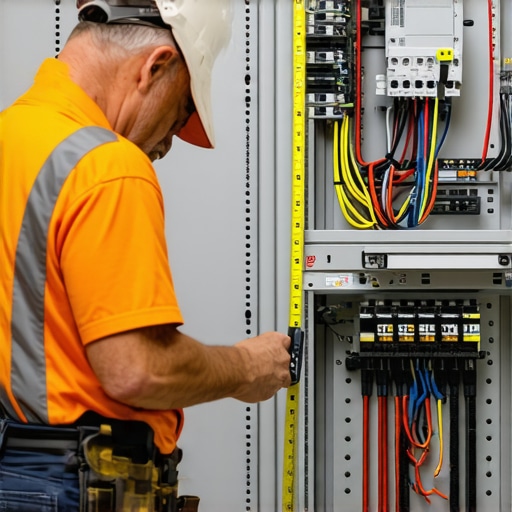
According to the Electrical Safety Foundation (ESFI), nearly 20% of commercial electrical fires are linked to poor maintenance or improper installation of high-draw equipment. This is not just a theoretical scenario. If you are not careful with your calculations, you will end up with 3 common wire sizing errors that melt breakers during long charging sessions. It is about understanding the nuance of continuous load versus peak load.
Does your charger stop for no reason when it gets hot?
It is a common frustration. You check the app, and it says everything is fine, yet the van is sitting at 20% charge. Often, this is a thermal safety cut-off that does not trigger a hard error code. This is why your ev charger stops mid-session without throwing a code. It is the hardware protecting itself from a meltdown because of poor ventilation or a failing internal contactor. Have you ever fallen into the trap of over-engineering a solution only to realize a simple software tweak or a few inches of clearance was the real issue? Let me know in the comments.
Transitioning from those frustrating mid-session failures to a state of total fleet reliability requires moving from a reactive mindset to a proactive one. I’ll tell you exactly what’s in my kit because it took me three years of trial and error to get it right. If you’re serious about uptime, you need a FLIR camera. Not necessarily the five-thousand-dollar industrial unit, as even a high-quality mobile attachment can work. I use mine to scan every connection point during a live charging session. If I see a fifteen-degree Celsius delta between the wire and the terminal, I know I’ve got a problem brewing. This is a level of precision that goes beyond just ev charger troubleshooting expert tips for common issues; it’s about seeing the invisible heat before it becomes a fire. According to the NFPA 70B Standard for Electrical Equipment Maintenance, the recent shift toward mandatory maintenance schedules for high-draw systems means your liability is on the line if you skip these thermal scans.
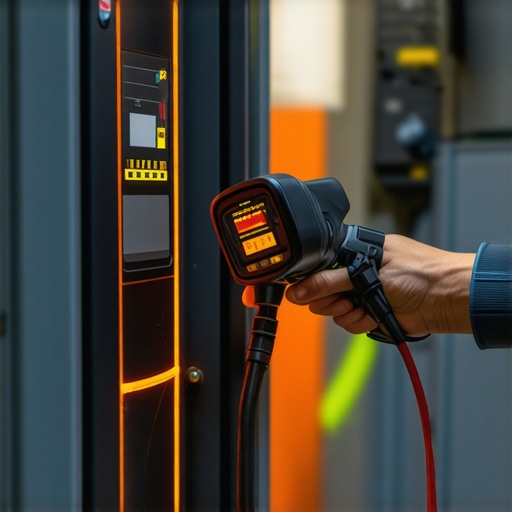
Why I Never Leave the Truck Without a Calibrated Torque Wrench
Beyond the camera, my most used tool is a Wiha torque screwdriver. I’ve seen too many contractors use a standard impact driver on sensitive terminal blocks in a rush to finish the job. That is a death sentence for the hardware. You have to respect the forgotten torque spec that fails half of all panel inspections. Metal expands and contracts every time a vehicle starts and stops its draw. If you overtighten, you strip the threads; if you undertighten, you create a high-resistance point. Both lead to a service call you won’t be able to bill for because it was an installation error from the start. I’ve personally seen chargers fail in six months because someone ‘eyeballed’ the tightness on a 60-amp circuit.
How can I make my commercial chargers last longer?
Longevity in a fleet environment comes down to a quarterly physical for your hardware. Every three months, my team goes through a rigorous checklist: we blow out the dust from the cooling vents, check the cable holsters for mechanical wear, and perform a firmware handshake. You’d be surprised how often troubleshooting ev charger connectivity problems can be solved just by cleaning the physical contact pins. If you don’t know how to clean the pins on your charging handle safely, you’re likely letting oxidation build up, which increases resistance, slows down charging speeds, and causes that annoying mid-session disconnect that leaves your drivers stranded. Keeping the physical interface clean is just as important as the electricity behind it.
Building a Future-Proof Digital Toolkit
Don’t ignore the digital side of your tool belt either. I rely heavily on OCPP (Open Charge Point Protocol) compliant software because it lets me manage different brands of chargers under one roof. If you’re managing a growing fleet, you don’t want five different apps to check on your drivers. Using a unified dashboard allows you to see load spikes across the whole property in real-time. Looking ahead, I see a major shift coming by 2026 where we move away from chargers being just power outlets and toward them being part of a bi-directional grid. This means your panel upgrades for ev chargers what you need to know today should account for V2G (Vehicle-to-Grid) capabilities. If you want to stay ahead of the game, I recommend doing a thermal audit this week. Rent a thermal camera for a day, run all your chargers at full blast for an hour, and look for the hot spots. You’ll likely find at least one connection that needs a half-turn of a wrench, and that one fix could save your entire operation from a disaster.
The Hard Lessons I Learned While Keeping Fleets Juiced
After managing dozens of depot installs, the most valuable lesson I can share is that thermal fatigue is real. I have seen 480V terminals that looked perfect to the eye but failed a load test because of microscopic oxidation. Another ‘lightbulb moment’ was realizing that local firmware overrides often solve connectivity issues faster than a manufacturer support ticket. If you can how to verify code compliance for your ev charger installation yourself, you save weeks of back-and-forth with inspectors. Uptime is not a setting; it is a discipline of checking the physical pins and the digital handshakes weekly.
My Essential Toolkit for Commercial EV Maintenance
Keeping a fleet running requires specific gear that most general electricians do not carry. My ‘go-to’ is a high-resolution thermal camera; I use it to spot heat signatures in the sub-panel during peak charging hours. I also never travel without a specialized contact cleaner specifically rated for high-voltage components to handle how to clean the pins on your charging handle safely. These tools, combined with panel upgrade strategies to meet ev charging code requirements in 2025, ensure that your infrastructure is as modern as the vehicles plugging into it.
#IMAGE_PLACEHOLDER_FINAL#
Building a Future Where Your Fleet Stays Moving
The transition to electric logistics is a marathon, not a sprint. By prioritizing preventative maintenance and staying disciplined with ensuring code compliance, you turn your charging depot into a competitive advantage rather than a liability. You have the power to prevent those 5:00 AM emergency calls by simply respecting the hardware and the code that governs it. Have you ever caught a hot cable or a loose connection during a routine check before it caused a shutdown? Let me know your experiences in the comments below.