I stood there in that damp basement, staring at a cluster of rusted electrical panels that looked like a bad game of Tetris. My buddy, who manages a dozen units across town, thought we would just slap a few chargers on the wall and be done with it. I wish it were that simple. When I first started helping neighbors with these projects, I made the classic rookie mistake of thinking a standard residential permit was enough. I ended up with a frustrated inspector and a project on hold for a month. If you are dealing with multi-unit dwellings, you are not just dealing with wires; you are dealing with a complex web of municipal bureaucracy. But do not worry—I have done the legwork so you do not have to. Today, we are going to break down exactly what you need to keep your project legal and on track.
The Red Tape That Actually Keeps Your Building Safe
Dealing with the city is never fun, but ensuring code compliance when installing EV chargers is the only way to protect your investment. In multi-family settings, the stakes are higher because a mistake does not just affect one person; it affects dozens of families sharing a roof. Most people assume they only need a basic electrical permit, but for multi-unit dwellings, you often need a specialized load-sharing permit or a site plan review. This is especially true if you are looking into panel upgrade strategies to meet EV charging code requirements in 2025. Have you ever had a permit application rejected for a reason that felt totally arbitrary? It is incredibly frustrating, but these rules exist to prevent the very real risk of electrical fires in dense housing.
Will These Extra Costs Sink Your Budget?
I get the skepticism. Permits are not free, and neither are the engineers sometimes required to sign off on them. You might be wondering if it is easier to just skip the formal process. Do not do it. According to the National Renewable Energy Laboratory, nearly 80% of EV charging happens at home, and inadequate infrastructure in multi-unit buildings is a leading barrier to adoption. This is precisely why apartment complexes are choosing managed charging over individual meters to stay within their power limits without blowing the budget. By getting the right permits now, you are basically buying insurance against a future headache. Plus, knowing how to pass your electrical inspection on the first visit will save you way more money than dodging the fees ever would. Let us look at the specific documents you will need to gather before you even pick up a screwdriver.
Calculate Your Building Power Capacity First
Imagine your building’s electrical capacity is like a pizza. If every tenant decides to take a huge slice at 6:00 PM when they get home from work, the box is going to be empty fast, and someone is going to be left hungry—or in this case, sitting in the dark. This is why you cannot just start drilling holes. You have to begin with a load calculation. If you are working with limited juice, you need to know how to load balance your home electrical system without a full panel swap. In multi-family settings, this often involves installing a smart controller that talks to all the chargers, making sure they do not collectively pull more than the main breaker can handle. If the math just does not add up, you might need to look into panel upgrades for ev chargers before you even think about mounting the hardware.
Label Every Circuit Like Your Life Depends on It
I once spent four grueling hours in a freezing, unlit garage in January because I tried to save five minutes during the install. I had used a smudged Sharpie on a piece of masking tape to label the breakers. By the time the inspector arrived, the condensation had turned my ‘chicken scratch’ into an illegible gray blur. He failed me on the spot. I had to go back, trace every single line, and use a professional label maker. It was a humiliating waste of time. Since then, I have learned that the specific circuit labels required by the electrical inspector are not just suggestions; they are the difference between a passed permit and a total project stall. Professional, permanent, and clear labeling ensures that any future technician—or a confused tenant—knows exactly which switch kills the power to a specific charger in an emergency. 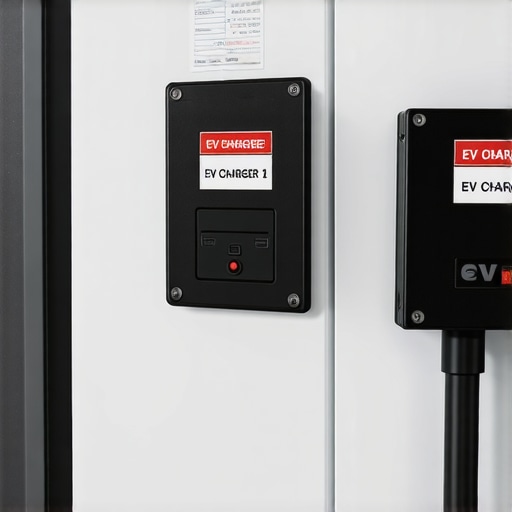
Choose Your Wiring Material Wisely
When you are running hundreds of feet of wire through a parking structure, the cost difference between materials starts to look very tempting. However, you have to be careful with your choices. Understanding the difference between copper and aluminum wiring for high load circuits is vital for long-term safety. While aluminum is lighter and cheaper, it requires specific connectors and meticulous installation to prevent the expansion and contraction that leads to loose connections. In high-density housing, I almost always advocate for copper for the final branch circuits because it handles the constant heat of an 8-hour charging cycle with much less fuss.
Keep Your Distance from Other Utilities
I’ve seen dozens of DIY attempts in apartment carports where the charger is practically hugging the gas line. This is a massive red flag. Code is very specific about the physical separation between electrical equipment and gas infrastructure. You need to verify the exact distance your charger must be from the gas meter to stay compliant. If you crowd these utilities, the inspector will make you rip it all out and start over.
Solve Connectivity Drops Before They Happen
In a multi-unit building, your chargers probably need to be ‘smart’ to handle billing and load sharing. If the chargers are in a concrete parking garage, they are essentially in a Faraday cage. I have seen countless projects fail because the software would not sync. If you find yourself stuck, ev charger troubleshooting becomes your best friend. Often, the reason your smart charger app keeps losing connection is simply a lack of a cellular repeater or a hardwired ethernet backhaul. Do not assume the building’s guest Wi-Fi will reach the basement. Plan for data just as carefully as you plan for power, and you will avoid the dreaded phone calls from tenants who cannot start their charge.Most contractors will tell you that a massive service upgrade is the only way to support multi-family EV charging, but I have found that to be a costly myth. In reality, modern energy management systems can often bypass the need for a 400-amp service by dynamically shifting loads. If you are being told otherwise, you might be looking at an outdated approach. Before you commit to a massive renovation, explore how to use a 100 amp panel for ev charging without a costly upgrade. This contrarian approach saves thousands in infrastructure costs while still meeting every safety standard. However, even with the best hardware, a subtle ‘oops’ factor often trips up the pros: the continuous load calculation. Unlike a dryer that runs for 45 minutes, an EV can pull maximum current for eight hours straight. The National Electrical Code (NEC) Section 625 specifically classifies EV chargers as continuous loads, meaning you must size your equipment at 125% of the charger’s output. If you miss this, you will notice 3 signs your main breaker is running dangerously hot during overnight charging, which is a massive fire risk in dense housing.
Why does your brand new 50-amp breaker keep tripping at 40 amps?
This is the question that haunts property managers. The answer lies in the physics of heat. Because charging is a continuous load, a 50-amp breaker is actually only designed to handle 40 amps of sustained current. If you push it to 45, the internal thermal element will eventually trip the circuit to prevent a meltdown. This is one of the most frequent troubleshooting ev chargers common compliance pitfalls and fixes I deal with. Furthermore, don’t overlook voltage drop on long runs. If your parking garage requires a 200-foot wire run, that 8-gauge wire might technically meet the ampacity code but fail in performance because the voltage drops too low for the car’s onboard computer to accept. I’ve seen this lead to the common wire sizing error that causes voltage drops during charging, which results in ‘phantom’ errors that are a nightmare to diagnose. 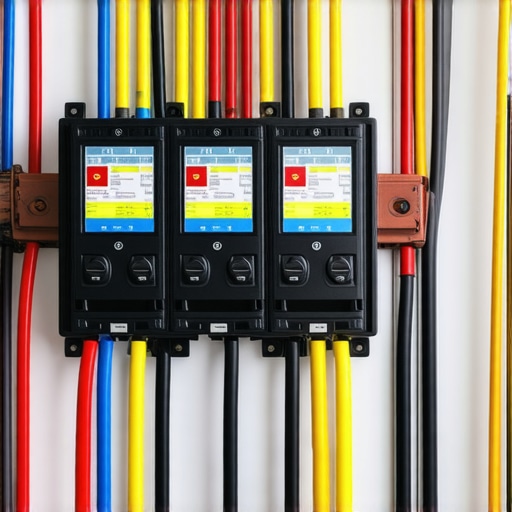 To stay ahead of the game, you need to look at code compliance essentials for ev charger installations in 2025 to ensure your hardware won’t be obsolete by next year. Have you ever fallen into this trap of under-sizing your infrastructure because of a ‘standard’ calculation? Let me know in the comments. If you are currently staring at a failed inspection or a humming breaker, do not guess—contact us so we can help you get it right the first time. Check our privacy policy for more information on how we handle your data.Once the dust settles on the physical install, you enter what I call the ‘forever phase’ of the project. This is where most people drop the ball. They think that because an EV charger has no moving parts, it is a set-it-and-forget-it appliance. It is not. I have seen 50-amp circuits that were perfectly installed begin to fail after three years because of vibration or thermal expansion. That is why the one tool I never walk into a parking garage without is a high-resolution thermal imager. I use it to scan every terminal block and breaker under full load. If I see a ‘hot spot’ that is even 10 degrees higher than the surrounding wires, I know I have a loose connection that is a fire waiting to happen. For property managers, ev charger troubleshooting expert tips for common issues often boil down to catching these thermal anomalies before they trip the main breaker.
Keep the juice flowing without constant repairs
Maintenance in a multi-unit setting is about more than just checking the hardware; it is about preventing physical degradation. I always tell my clients to inspect the charging pins every quarter. Dust, moisture, and road salt can build up inside the handle, causing high resistance and melting the port. You can learn how to clean the pins on your charging handle safely to prevent this. Furthermore, if your chargers are exposed to the elements, remember that why outdoor charging stations need more than just a plastic cover is due to the internal condensation that ruins circuit boards. 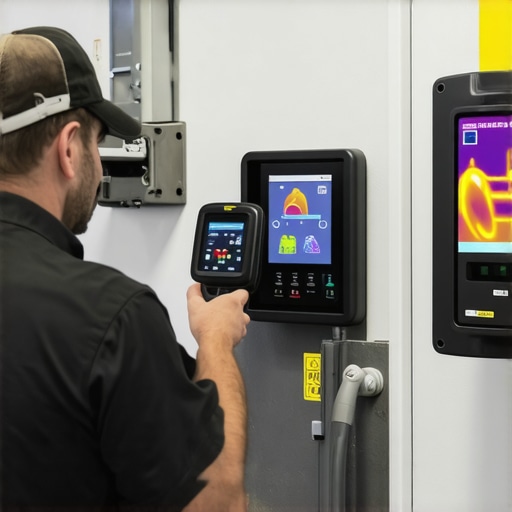
Scale your system as the building grows
Eventually, your ten chargers will need to become twenty. If you didn’t plan for this, you’ll be tearing out drywall again. This is where I recommend looking into upgrading your panel for better ev charging performance early on or setting up sub-panels specifically for the garage. I’ve found that knowing how to upgrade your garage sub-panel for dual charging stations allows you to daisy-chain units as demand increases without having to run a new dedicated line back to the main service for every single tenant. According to technical guidelines from the IEEE Standards Association, maintaining power quality in high-density residential areas requires strict adherence to harmonic distortion limits, which can be exacerbated by multiple high-speed chargers running simultaneously.
Why your chargers need to stay online
In the future, I predict we will move toward a ‘Vehicle-to-Grid’ (V2G) standard where your tenants’ cars actually help power the building during peak hours. But for that to work, your connectivity must be flawless. If you are seeing ‘offline’ errors, troubleshooting ev charger connectivity problems usually points back to the fact that why your commercial charger needs a dedicated cellular connection is to bypass the building’s congested Wi-Fi. I highly suggest you try this one tip: buy a basic thermal camera and scan your panel while your EV is charging tonight. You might be surprised at what is heating up. If you see something glowing bright white on that screen, do not wait—contact us immediately to prevent a meltdown. You can also check our privacy policy-2 to see how we protect your information.
The Hard Truths About Multi-Family EV Installs That I Had to Learn the Hard Way
After years of wrestling with wiring in parking garages, I’ve realized that the most expensive mistake you can make is trying to move too fast. First, always respect the torque specs. A loose wire in a high-draw circuit isn’t just a nuisance; it’s a hazard. I’ve seen beautifully installed systems melt down because a single screw wasn’t tightened to the manufacturer’s exact specifications. Second, don’t ignore the data connection. A ‘smart’ charger that can’t connect is just an expensive, dumb plastic box. Finally, build a rapport with your local inspector before you start. Showing them you are focused on how to verify code compliance for your ev charger installation early on can turn a potential adversary into a helpful guide.
My Must-Have Toolkit for Zero-Stress Charging Projects
I don’t leave my shop without a few specific items that make these complex installs manageable. A high-quality industrial label maker is my first recommendation because the specific circuit labels required by the electrical inspector are non-negotiable. I also rely heavily on a thermal imaging camera to detect heat buildup before it leads to a failure. For the paperwork side, I keep the most recent NEC handbook bookmarked at Section 625. If you’re tackling your first large project, checking how to pass your electrical inspection on the first visit will provide a checklist that saves hours of backtracking.
#IMAGE_PLACE_HOLDER_E#
Your Building Is Ready for This Transition
Taking on an EV project in a multi-unit dwelling can feel like you’re trying to solve a puzzle where the pieces keep changing shape. But remember, you’re not just installing hardware; you’re future-proofing a community and increasing property value. Whether you are implementing panel upgrade strategies to meet EV charging code requirements in 2025 or simply starting with a single station, you are making progress. If you find yourself hitting a wall or the technical details feel overwhelming, contact us and let’s get your project back on track. For more details on how we handle these projects, feel free to review our privacy policy-2. Have you ever had an inspector fail your project for a minor labeling or wiring error? Let me know in the comments below!