I stood there, staring at the digital readout on the property manager’s dashboard, feeling the heat rise in my neck. We had just finished a beautiful install—sleek pedestals, crisp paint, the works. But the data didn’t lie. Despite being rated for 48 amps, every single car was pulling a measly 24. I had bragged about the speed we’d provide, and now I looked like a guy who didn’t know a volt from a bolt. It was a humbling moment that sent me deep into the weeds of [troubleshooting EV chargers](https://brightsparkzelectric.com/ev-charger-troubleshooting-expert-tips-for-common-issues) to figure out why a perfectly good piece of hardware would suddenly decide to cut its own throat. If you are seeing your charging speeds lopped in half, you aren’t crazy, and your charger probably isn’t broken. Usually, it’s a silent setting or a safety protocol doing exactly what it was programmed to do—even if it’s driving you nuts. Today, I’m going to pull back the curtain on why these units throttle down and how you can reclaim the power you’re actually paying for.
Why Your Amperage Dropped Without Warning
The truth is, commercial chargers are a lot more sensitive than the ones we throw in our garages. In my early days, I made the classic mistake of thinking that if the breaker stayed on, the power would flow. I was wrong. Often, the culprit is ‘Load Balancing’ or ‘Power Sharing’ configurations. If your system thinks the rest of the building is starving for juice, it will voluntarily starve the cars first. This is especially common if you haven’t looked into [upgrading your panel for better EV charging performance](https://brightsparkzelectric.com/upgrading-your-panel-for-better-ev-charging-performance). According to the National Fire Protection Association (NFPA) in their NFPA 70 guidelines, EVSE must be considered a continuous load, which means the system is designed to be conservative to prevent fires. If your charger detects even a slight fluctuation in voltage or a lack of communication with the server, it defaults to a ‘safe’ state—which is almost always 50% power. Have you noticed your chargers slowing down specifically during peak business hours?
Does Your Unit Actually Have Enough Brain to Run Fast?
One of the biggest ‘aha!’ moments for me was realizing that many commercial units rely on a rock-solid data connection to authorize full-speed charging. If the signal is weak, the unit throttles back to ensure it doesn’t overheat or lose track of billing data. This is why I always tell folks that [your commercial charger needs a dedicated cellular connection](https://brightsparkzelectric.com/why-your-commercial-charger-needs-a-dedicated-cellular-connection) rather than relying on the spotty building Wi-Fi. When the connection drops, the charger gets nervous. It’s like a pilot flying through fog; it slows down because it can’t see what’s ahead. Beyond the signal, there is also the matter of internal dip switches and ‘commissioning’ errors. I once spent four hours on a ladder only to realize I’d left a physical toggle in the ‘half-power’ position during the initial setup. It’s a gut-punch, but it’s a fixable one. Before you call for a total replacement, we need to look at the ‘handshake’ between your charger and the grid.
Get Your Amps Back Without Calling the Manufacturer
The first thing I do when a client complains about a slow charge isn’t grabbing my laptop; it’s grabbing my screwdriver. You have to verify the physical commissioning settings before you blame the software. I remember a job at a local hotel where three brand-new chargers were capped at 3.3kW. The owner was furious, thinking he’d been sold lemons. I popped the faceplates and found that the installer had set the internal rotary dials to position ‘2’ instead of ‘8’ because they were worried about the older transformer on-site. By not properly [how to tell if your electrical panel can actually handle a level 2 charger](https://brightsparkzelectric.com/how-to-tell-if-your-electrical-panel-can-actually-handle-a-level-2-charger), they had effectively neutered the hardware to avoid a trip that might never have happened. If your unit has physical dip switches or a rotary dial, that is your hard ceiling. No amount of app-tinkering will override a physical switch set to a lower amperage.
Why Your Wi-Fi Signal Is Throttling Your Charging Speed
It sounds like a tech-support cliché, but your internet connection directly dictates your charging curve. Many smart chargers are programmed with a ‘fail-safe’ mode. If the charger loses its handshake with the cloud server for more than a few minutes, it assumes it can’t monitor the building’s total load anymore. To prevent a catastrophic main-breaker trip, it drops to its lowest possible setting. I’ve seen this happen dozens of times when a metal dumpster is moved between the router and the charger, killing the signal. You can often resolve this by learning [how to update your charger software without calling a technician](https://brightsparkzelectric.com/how-to-update-your-charger-software-without-calling-a-technician) to ensure the firmware isn’t hanging on a bugged connection request. If you’re constantly seeing ‘Offline’ in your app, you’re likely dealing with [troubleshooting ev charger connectivity problems](https://brightsparkzelectric.com/troubleshooting-ev-charger-connectivity-problems) that are actively stealing your miles per hour.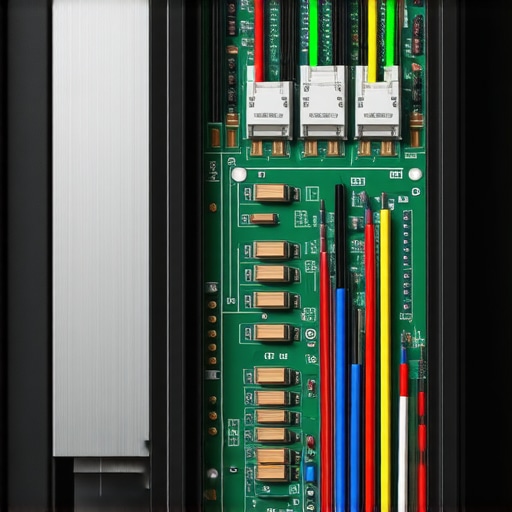
Stop Your Home From Starving the Charger
If the physical switches are correct and the signal is strong, but you’re still losing power, your charger is likely ‘listening’ to your electrical panel and didn’t like what it heard. Modern systems use Current Transformers (CT clamps) to monitor how much juice your AC, dryer, and oven are pulling. If you haven’t figured out [how to load balance your home electrical system without a full panel swap](https://brightsparkzelectric.com/how-to-load-balance-your-home-electrical-system-without-a-full-panel-swap), your charger will sacrifice itself the moment your water heater kicks on. This is a safety feature, but it’s often triggered prematurely by [the hidden danger of loose neutral wires in your electrical panel](https://brightsparkzelectric.com/the-hidden-danger-of-loose-neutral-wires-in-your-electrical-panel) or poor connections that cause heat spikes. I once spent a whole afternoon chasing a ghost throttle only to find a slightly loose lug on the breaker. The heat from that resistance was telling the charger’s thermal sensor that the whole house was on fire. Also, keep an eye on your wiring; using the wrong gauge is a recipe for disaster, and [the common wire sizing error that causes voltage drops during charging](https://brightsparkzelectric.com/the-common-wire-sizing-error-that-causes-voltage-drops-during-charging) will almost always trigger an automatic amperage reduction to protect the insulation from melting. Finally, always verify your grounding, as [3 grounding errors that kill ev charger motherboards before they are a year old](https://brightsparkzelectric.com/3-grounding-errors-that-kill-ev-charger-motherboards-before-they-are-a-year-old) often start as simple ‘nuisance’ throttling before the board eventually fries completely.
Why Your Electrician Might Be Wrong About That Panel Swap
Everyone in the industry tells you the same thing: if you want a fast charger, you need a 200-amp service upgrade. It’s the standard answer, but in my experience, it’s often an expensive overkill. The contrarian truth is that modern energy management systems (EMS) allow you to skip the $4,000 panel swap entirely. By using [how to load balance your home electrical system without a full panel swap](https://brightsparkzelectric.com/how-to-load-balance-your-home-electrical-system-without-a-full-panel-swap), you can prioritize your home’s critical loads and only send the ‘leftover’ juice to the car. A study by the Electric Power Research Institute (EPRI) highlighted that managed charging can defer or eliminate the need for infrastructure upgrades in over 60% of residential cases. This isn’t just about saving money; it’s about working smarter with the capacity you already have. Before you sign off on a massive renovation, look into [panel upgrade strategies to meet ev charging code requirements in 2025](https://brightsparkzelectric.com/panel-upgrade-strategies-to-meet-ev-charging-code-requirements-in-2025) that focus on smart controllers rather than bigger copper bars.
Can a 100-Amp Main Handle Your Daily Commute Without Exploding?
The short answer is yes, but the ‘how’ is what trips people up. Most homeowners believe that the sum of their breakers cannot exceed the main breaker rating. That’s a myth. Your panel is designed with a ‘diversity factor’—the assumption that you aren’t running the dryer, the oven, the AC, and the welder all at once. However, the National Electrical Code (NEC) classifies EV chargers as a continuous load (Article 625). This means you must calculate the load at 125%. If you’re trying to figure out [how to calculate if your 100-amp service can handle a daily commute](https://brightsparkzelectric.com/how-to-calculate-if-your-100-amp-service-can-handle-a-daily-commute), you need to be honest about your peak usage. I’ve seen DIYers shove a 50-amp breaker into a 100-amp panel and wonder why their [3 signs your main breaker is running dangerously hot during overnight charging](https://brightsparkzelectric.com/3-signs-your-main-breaker-is-running-dangerously-hot-during-overnight-charging) are starting to show. It’s not just about the space in the box; it’s about the thermal threshold of the busbar. 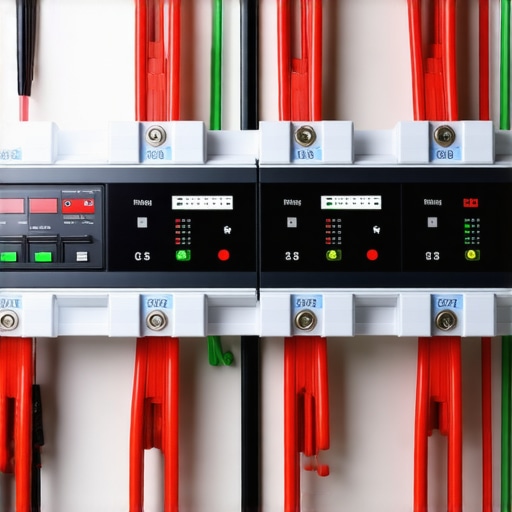
Avoid the Clear Workspace Violation That Fails Every Inspection
Here is the ‘oops’ factor that kills more projects than actual wiring errors: the working space. You can have the most beautiful conduit runs in the world, but if your charger or the new sub-panel is tucked behind a water heater or a shelf full of paint cans, you’re going to fail. Inspectors are ruthless about NEC 110.26, which requires a clear ‘envelope’ of 30 inches wide and 36 inches deep in front of electrical equipment. I once saw a $10,000 commercial install get rejected because a permanent bollard was placed 2 inches too close to the unit. It’s [the working space violation that fails more ev panel inspections than anything else](https://brightsparkzelectric.com/the-working-space-violation-that-fails-more-ev-panel-inspections-than-anything-else), and it is a nightmare to fix once the concrete is poured. Always [verify code compliance for your ev charger installation](https://brightsparkzelectric.com/how-to-verify-code-compliance-for-your-ev-charger-installation) before the first hole is drilled. Have you ever fallen into this trap or had an inspector flag something that seemed totally insignificant? Let me know in the comments.
The One Tool That Saves My Life During Yearly Inspections
I’ve learned the hard way that a multimeter only tells half the story. If you want to know if your installation is actually healthy, you need to see the heat. I never walk onto a job site without my FLIR thermal camera. Why? Because resistance creates heat long before it trips a breaker. When you are pushing 40 or 48 amps through a circuit for six hours straight, a slightly loose lug—something even a quarter-turn away from perfect—will glow like a lightbulb on an infrared screen. This is exactly how to spot a dangerous heat build-up in your ev charging cable before the plastic begins to deform. I’ve seen brand-new installs where the installer used the wrong torque setting, leading to a thermal runaway that eventually melts the housing. If you’re serious about your gear, don’t just ‘snug it up.’ The InterNational Electrical Testing Association (NETA) specifies in their MTS standards that mechanical connections must be verified with a calibrated torque wrench. It sounds like overkill until you realize that thermal expansion and contraction over a few hundred charging cycles can literally unscrew your hard work.
How do I keep my charger running at peak performance for years?
Maintenance isn’t just about the wires; it’s about the environment. If your charger is outside, the biggest performance killer is actually ‘pin oxidation.’ I’ve had clients call me saying their car won’t start a session, and nine times out of ten, it’s because the tiny communication pins in the J1772 handle have a layer of grit or corrosion. You can’t just spray WD-40 in there; you need to know how to clean the pins on your charging handle safely using electronic contact cleaner and a non-conductive pick. For my commercial clients, I always implement the maintenance guide for commercial fleet charging stations, which includes a quarterly check of the gasket seals. If moisture gets into the motherboard, you’ll start seeing those ‘nuisance’ amperage drops we talked about earlier. Beyond the physical, keep your firmware updated. Manufacturers often release patches that improve the handshake between the car and the grid, and knowing how to update your charger software without calling a technician will save you a $200 service call just for a ‘click’ on an app. 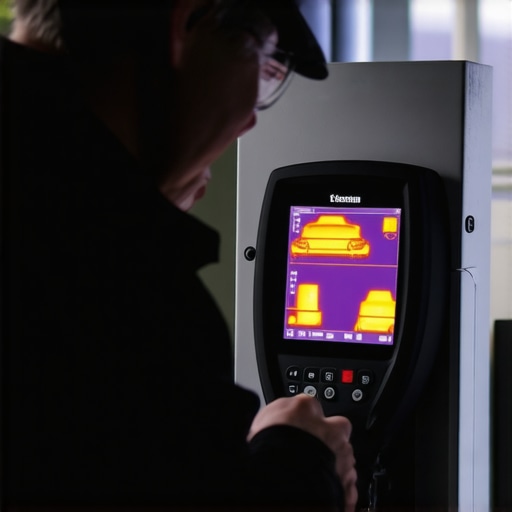
The Next Frontier of Scaling Your Home Power
Looking forward, the game is changing from ‘how much can I pull?’ to ‘how much can I push back?’ Bidirectional charging (V2G) is the next massive trend. We are moving toward a world where your car isn’t just a load on your panel, but a backup battery for your house. This means your current upgrading your panel for better ev charging performance today needs to account for the disconnect switches and specialized inverters we’ll see in 2026 and beyond. If you’re installing a sub-panel now, size it for the future. Don’t just meet the minimum code; look into panel upgrade strategies to meet ev charging code requirements in 2025 to ensure you aren’t ripping everything out again in three years. I predict that within the next five years, smart panels with built-in digital load shedding will be the standard for every home with an EV. If you want to stay ahead of the curve, I highly recommend grabbing a torque screwdriver and checking your charger’s terminal blocks this weekend—you might be surprised how much a few months of vibration can loosen things up.
The Brutal Truth About Why Those Amps Keep Vanishing
After years in the field, I’ve realized that most charging issues aren’t hardware failures; they’re communication breakdowns. I once lost an entire weekend trying to fix a ‘broken’ charger that was actually just doing exactly what it was programmed to do because of a loose ground wire. If there is one thing you take away from this, let it be that precision beats power every time. Often, the speed drop is a symptom of the system protecting itself from high resistance or poor signal.
- Never skip the torque wrench. A loose connection creates heat, and heat triggers safety throttling.
- Always check your data signal before blaming the car. If the charger can’t ‘talk’ to the server, it won’t give you full speed.
- Verify your installer used the right wire gauge; the common wire sizing error that causes voltage drops during charging is the number one reason for mysterious speed loss.
My Go-To Kit for a Perfect EV Install
You don’t need a truck full of gadgets, but you do need the right ones. I always rely on a high-quality thermal imaging camera to see the heat signatures that eyes miss. It’s the easiest way how to spot a dangerous heat build-up in your ev charging cable before it becomes a hazard. I also suggest keeping a dedicated electronic contact cleaner in your garage; it’s essential for knowing how to clean the pins on your charging handle safely without causing a short. Finally, stay updated on the latest NEC changes by checking out panel upgrade strategies to meet ev charging code requirements in 2025—it’s much cheaper to plan for the future than to rewire your home in two years.
Future-Proof Your Power Today
Getting your EV charger running at peak performance isn’t just about speed; it’s about peace of mind. When you take the time to verify code compliance for your ev charger installation, you aren’t just pleasing an inspector—you’re protecting your home. Whether you are dealing with ev charger troubleshooting expert tips for common issues or planning a major service upgrade, remember that knowledge is the best tool in your box. Don’t be afraid to dig into the settings and claim the power you’re paying for. Have you ever seen your charging speed drop by half for no obvious reason? Let me know in the comments below.