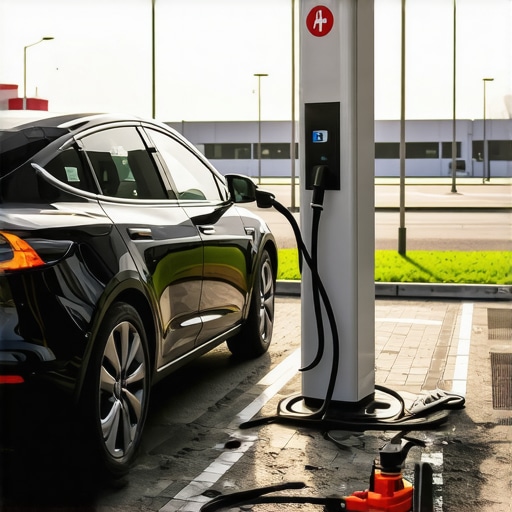

Troubleshooting EV Chargers: Essential Tips for Reliable Power & Safety
Have you ever been ready to leave for work or a weekend getaway, only to find your electric vehicle charger refusing to cooperate? That frustrating moment of uncertainty can turn a simple morning into a stressful puzzle. I remember the first time my charger flickered and then stopped altogether. It was a real eye-opener about how crucial reliable troubleshooting is for keeping my EV charged and my peace of mind intact. If you’ve faced similar issues, you know how quickly doubts about safety and effectiveness creep in. But don’t worry—today, I’ll walk you through practical tips that will help you diagnose and fix common problems, ensuring your charger works reliably and safely.
Why Proper Troubleshooting Saves You Time and Money
When my charger failed unexpectedly, I quickly learned that many issues stem from simple, correctable causes. Skipping proper troubleshooting can lead to unnecessary replacements or, worse, safety hazards. According to the U.S. Department of Energy, poor electrical connections and outdated panels are among the leading causes of EV charger failures at home. By understanding the root causes and addressing them early, you can avoid costly repairs and keep your home safe. In this post, I’ll share the most effective strategies I’ve picked up over years of DIY fixes and professional advice. We’ll cover how to verify code compliance, upgrade your electrical panel if needed, and spot common wiring mistakes. Ready to become your own troubleshooting expert? Let’s dive in.
Is It Really Worth the Effort or Just a Waste of Time?
Early on, I made the mistake of assuming that my charger’s issues were due to a faulty unit, leading me to buy a new one. Turns out, many problems are related to wiring or improper setup—things I could fix myself with the right guidance. Proper troubleshooting isn’t just about fixing the problem; it’s about understanding safety protocols and ensuring your system complies with local codes. This knowledge can save you from future headaches and even prevent dangerous situations. If you’re skeptical about tackling these issues on your own, remember that many resources, like this comprehensive troubleshooting guide, are designed to help homeowners like you. The key is to start with basic checks and know when to call a professional. Now, let’s explore the first step: ensuring your setup meets safety standards and code requirements, which is often overlooked but absolutely essential.
Check Your Electrical System Before Anything Else
When my charger suddenly stopped working, I first examined the electrical setup. Think of your electrical system as the backbone of your home’s power; if it’s weak or outdated, your charger will struggle. Turn off the charger and inspect the wiring for signs of damage, corrosion, or loose connections. Use a multimeter to verify voltage levels at the outlet—ideally, it should match your charger’s specifications. If you notice irregular readings or signs of wear, it’s time to consider upgrading your electrical panel. A proper panel upgrade not only fixes current issues but also prevents future problems. For detailed guidance, check out panel upgrades for EV chargers.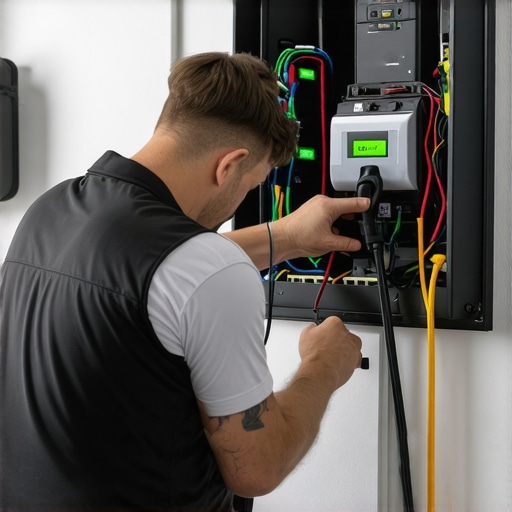
Verify Code Compliance and Installation Standards
Ensuring your setup meets local electrical codes is crucial for safety and reliability. I had a frustrating experience where my charger kept disconnecting, and after verifying code compliance, I realized my wiring didn’t match standards. It’s essential to confirm that your installation adheres to local regulations—this can involve checking outlet grounding, circuit breaker ratings, and wiring methods. Use tools like a checklist or hire a professional if needed. Proper code compliance prevents hazards and ensures your warranty remains valid. To learn more, visit verify code compliance and installing standards.
Inspect and Test Your Wiring Connections
Loose or faulty wiring is often the culprit behind EV charger issues. I once found a loose wire behind my outlet that caused intermittent charging. To troubleshoot, turn off the power at your breaker panel. Carefully remove the outlet cover and inspect all wiring connections. Tighten any loose screws and replace damaged wires. Use a multimeter to verify continuity and correct voltage. Remember, safety first—if you’re unsure, contact a licensed electrician. Proper wiring ensures consistent power flow and prevents shorts or fires. For detailed wiring diagnostics, consult connectivity troubleshooting tips.
Test Your Power Source and Outlet
Sometimes, the problem isn’t the charger but the power source. I tested my outlet with a known working device and found inconsistent power delivery. Use a multimeter or a dedicated outlet tester to verify proper voltage and grounding. If the outlet is faulty, replace it or upgrade to a dedicated circuit. Avoid using extension cords or adapters—they can cause voltage drops or safety issues. Reliable power sources are the foundation of effective charging. For more tips, see power source troubleshooting.
Monitor Your Charger’s Communication and Connectivity
Even if wiring and power are fine, connection issues can cause charging problems. I experienced this firsthand when my charger kept disconnecting from the app. Check that your Wi-Fi or Ethernet connection is stable. Restart your router if needed and ensure your charger’s firmware is up to date. Some chargers have indicator lights—refer to your manual to interpret these signals. If connectivity persists, consult connectivity troubleshooting tips for detailed guidance. Reliable communication is key to maintaining consistent charging cycles and remote monitoring.
Many homeowners jump to conclusions when their EV charger encounters issues, but let’s dig deeper into what most people get wrong about troubleshooting these systems. One widespread misconception is that a simple reset always fixes the problem. While restarting your charger or router can resolve temporary glitches, persistent issues often stem from underlying electrical or compliance problems. Believing that a quick reset is a catch-all solution can lead you to overlook essential checks like verifying code compliance or inspecting wiring connections, which are critical for safety and reliability. Proper troubleshooting involves a comprehensive approach, including using multimeters to verify voltage levels and ensuring your electrical panel can handle the load. Skipping these steps can cause repeated failures and even safety hazards. For example, many assume that if the charger lights blink, it’s a hardware fault, but in reality, it could be an outdated circuit breaker or improper grounding. Take the time to perform thorough diagnostics rather than relying on assumptions. If you’re unsure, consulting trusted resources like expert troubleshooting guides can save you from costly mistakes. Have you ever fallen into this trap? Let me know in the comments.
Keeping your electric vehicle charger in top shape requires more than just troubleshooting when issues arise. Regular maintenance, the right tools, and a proactive approach are key to ensuring reliable performance over the years. In this post, I’ll share the specific equipment and methods I personally rely on to keep my EV charger working seamlessly, along with insights into how these tools can help you save time and prevent costly repairs.
Invest in a Good Multimeter for Accurate Diagnostics
One of the most essential tools I recommend is a high-quality multimeter. I personally use the Fluke 117 because of its reliability and precision. This device allows me to verify voltage levels at outlets, test wiring continuity, and ensure connections are solid—crucial steps for long-term maintenance. Regularly checking your wiring with a multimeter can catch issues like voltage drops or grounding problems before they become safety hazards or cause equipment failure. For detailed guidance on how to use a multimeter for EV charger maintenance, check out this expert guide.
Use a Thermal Camera to Detect Hidden Problems
Another tool I’ve found invaluable is a thermal imaging camera. I personally rely on the FLIR One Pro because it connects directly to my smartphone, making it easy to spot overheating wiring or components that might be degrading over time. Regular thermal scans of your electrical panel and charger connections can reveal hotspots indicating loose connections or overloaded circuits—issues that are often hidden from plain sight but can cause long-term damage if ignored. Incorporating thermal imaging into your routine checks helps catch problems early, saving you from expensive repairs later. Looking ahead, I predict that smart diagnostic tools integrating IoT sensors will become more common, providing real-time alerts for potential failures.
Keep a Detailed Maintenance Log
Beyond the physical tools, I emphasize the importance of maintaining a detailed log of all inspections, tests, and upgrades. I use a digital notebook app where I record voltage readings, thermal images, and any adjustments made. This record helps track the health of your system over time, making it easier to identify trends and plan proactive maintenance. Regular documentation also ensures that if you need to call in a professional, you can provide precise information about what has been checked or changed, streamlining the repair process. Remember, consistent maintenance is the foundation of long-term reliability.
How do I maintain my EV charger over time?
To keep your EV charger working smoothly for years, schedule routine inspections every 6 to 12 months. Verify wiring connections, check for signs of wear or overheating, and test voltage levels with your multimeter. Consider annual thermal scans to detect hidden issues. Keep your firmware updated if your charger supports remote updates, and ensure your electrical panel has sufficient capacity—upgrading your panel can significantly improve performance, especially as your charging needs grow. Regularly review your setup against current code standards to stay compliant and safe. For comprehensive advice, explore panel upgrade tips. If you notice persistent issues, don’t hesitate to contact a licensed electrician through this contact page.
The Hardest Lesson I Learned About EV Charger Troubleshooting
One of the most eye-opening realizations I had was that many charging issues stem from simple wiring mistakes or outdated electrical panels, not faulty chargers. I once replaced a perfectly good unit only to find the problem persisted. That taught me to focus on electrical integrity first and foremost, saving both time and money. The importance of verifying wiring, grounding, and circuit capacity cannot be overstated—these are often the root causes of persistent problems. Trust me, a thorough initial check beats replacing equipment multiple times.
My Essential Toolkit for EV Charger Maintenance
Over time, I’ve come to rely on a few key tools that make troubleshooting manageable. A high-quality multimeter, like the Fluke 117, is essential for verifying voltage and continuity. It helps me quickly identify wiring faults or voltage drops that could cause charging interruptions. Additionally, a thermal camera such as the FLIR One Pro has been invaluable for detecting hidden hotspots indicating loose connections or overloaded circuits. These tools have helped me catch emerging problems early, preventing costly repairs and ensuring safety.
What You Can Do Today to Keep Your Charger Running Smoothly
Regular maintenance is your best defense against unexpected failures. Schedule inspections every 6 to 12 months, checking wiring connections, testing voltage levels, and performing thermal scans. Keep your firmware updated if your charger supports remote upgrades, and consider upgrading your electrical panel if it’s outdated or undersized. Remember, safety and compliance are ongoing priorities—review your setup periodically against current codes using trusted resources. Taking proactive steps means fewer surprises and a longer-lasting, safer charging experience.
This post hits the mark on what I’ve learned from my own experience with EV chargers. I initially thought that replacing the unit would solve my frequent disconnections, but after doing some wiring checks and updating my electrical panel, everything runs smoothly now. I appreciate the emphasis on thorough troubleshooting—it’s so easy to overlook the basics like wiring integrity or grounding, which are often the root causes. I also started using a thermal camera to monitor electrical hotspots, and it’s been a real game-changer in catching problems early before they escalate. Has anyone else found that routine thermal scans or simple wiring inspections have helped prevent bigger issues? I think combining proper diagnostics with proactive maintenance really is the key to ensuring safety and reliable charging over the long term.