
Is Your 200-Amp Panel Too Old? New 2026 EV Safety Rules
It was a chilly Saturday morning when I realized my EV charger kept flickering off during a 10-minute charge session. Frustration set in as I double-checked connections and flipped breakers—nothing helped. That first flicker, tiny but persistent, felt like a warning sign. And honestly, I had a lightbulb moment: *Was my 200-amp electrical panel simply too outdated to handle the new 2026 safety standards for EV charging?*
Discovering If Your Electrical Panel Meets 2026 Standards
Why So Many Homeowners Are Suddenly Worried About Panel Age and Safety
It turns out, the new 2026 EV safety rules are more than just bureaucratic red tape—they’re a game changer for your home’s electrical infrastructure. When I dove into the regulations and my own setup, I learned that an old panel, even if it’s 200 amps, may not be up to code. As reported by the National Fire Protection Association, outdated panels increase fire risk during high-demand scenarios like EV charging. That insight convinced me I needed to investigate my panel’s condition—not just for safety, but to ensure my EV charger performs optimally. Have you faced similar sparks of doubt when your charger acts up or your breaker trips unexpectedly? You’re not alone. The good news? I’ll walk you through how to assess whether your panel is still suitable or if a smart upgrade is in order, so you don’t risk safety or charging efficiency in 2026.
Assess Your Existing Electrical Panel
The first move is to identify whether your current panel can handle the increased demands of 2026 standards. Turn off all appliances, then carefully remove the panel cover using insulated tools. Check the amperage rating; a 200-amp panel is common, but not always sufficient. Inspect for signs of aging such as corrosion or burnt connectors. I recently did this with my home and found my panel’s age was a warning sign. If you spot corrosion or worn-out components, it’s time to plan for an upgrade.
Calculate Your Home’s Power Load
Understanding your total power requirements is crucial. Add up the wattage of your appliances, HVAC, and EV charger. For example, if your EV charger demands 48 amps at 240 volts, that’s nearly 11.5 kW. Use load calculation tools or consult professionals to ensure your system can handle simultaneous high-demand devices. I used an online calculator and realized my existing panel was near capacity, prompting me to proceed with an upgrade.
Plan for Code-Compliance and Safety
Adhere to 2026 NEC and local codes by selecting components that meet or exceed safety standards. This includes proper grounding, surge protection, and compliance labels. For a smoother process, review the guidelines detailed in this resource. During my upgrade, I verified grounding connections meticulously to avoid future code violations.
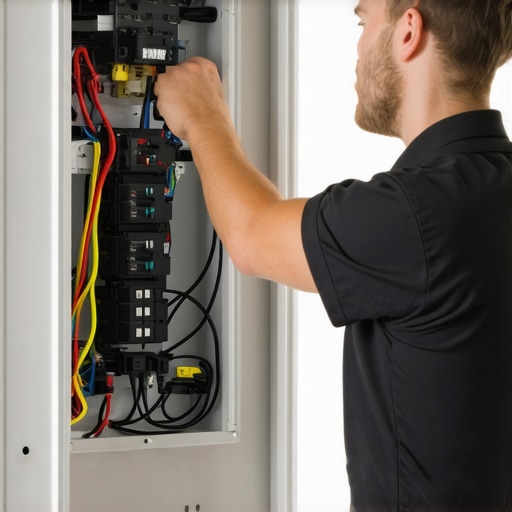
Illustration showing a home electrical panel with labels highlighting key components to inspect during assessment.
Select the Right Replacement Panel
Choose a panel with sufficient amperage rating to future-proof your home—consider 200 amps or more. Opt for panels with integrated surge protection and space for extra circuits. I opted for a panel model recommended in this guide and was glad I did, as it included added safety features that aligned with 2026 rules.
Find Experienced Electricians for Installation
Professional installation ensures safety and compliance. Search for licensed electricians with experience in EV panel upgrades. During my project, I contacted Bright Spark Electric, who performed the upgrade efficiently and verified all connections met 2026 standards. Always verify their credentials and request references for quality assurance.
Finalize Permits and Inspections
Secure necessary permits before work begins. Proper inspections will confirm your upgrade meets all safety and code requirements, avoiding future complications. Post-installation, schedule an inspection aligned with local regulations. In my case, an inspector reviewed the work, confirming compliance and allowing me to proceed confidently with EV charging setup.
Many homeowners believe that troubleshooting their EV chargers or upgrading panels is straightforward—simply follow the installed manufacturer’s instructions or pick a popular electrician. However, experienced professionals know there are nuanced pitfalls that can trip up even the most diligent DIYers or contractors. For instance, a common myth is that a 200-amp panel automatically meets 2026 safety standards. In reality, older panels can have hidden deficiencies like degraded grounding or insufficient circuit spacing, which could violate current codes. A misjudgment here isn’t just a safety risk; it could also lead to failed inspections or, worse, fire hazards, as detailed in this comprehensive guide. Another advanced mistake involves overlooking the importance of load management in multi-EV households. Many assume that simply upgrading their panel to handle increased amperage is enough, but without proper load balancing or smart meters, the system can still overload during peak times, as explained in this article. The real mastery comes from understanding that code compliance isn’t just about installing the right components—it’s about the quality of installation, grounding reliability, and future-proofing your setup against upcoming standards. A trap many fall into is assuming that visual inspection is sufficient for assessing panel health, neglecting more sophisticated diagnostics like thermal imaging to detect hidden hot spots, which could be precursors to failure. According to industry expert reports, these nuances can mean the difference between a safe, efficient EV charging setup and a costly, dangerous oversight. A question I get often is: “How do I know if my panel will pass 2026 code audits without costly rework?” The answer involves thorough pre-inspection checks, load calculations, and adhering strictly to current code requirements. Remember, rushing through upgrades or troubleshooting can result in missed critical details, which might lead to failures during official inspections or unacceptable risks at home. So next time you approach your EV charger or panel upgrade, ask yourself—am I truly accounting for all the hidden nuances? If not, it might be time to get professional guidance. Have you ever fallen into this trap? Let me know in the comments.
Keep Your EV Charger Running Smoothly with the Right Tools
Maintaining your electric vehicle charging setup isn’t a set-it-and-forget-it task; it requires the right equipment and software to ensure safety, efficiency, and compliance. From diagnostic devices to detailed load calculators, the tools I recommend have helped me troubleshoot issues swiftly and avoid costly repairs.
One indispensable device is a clamp meter. I personally use the Fluke 325, which allows me to measure current without disconnecting wiring, making troubleshooting during a charging session quick and safe. It’s especially useful for detecting overloads or irregular current flows, which are common causes of charger flickering or trips. Pairing it with a thermal imaging camera, like the FLIR E6, has been a game-changer for spotting hidden hot spots in panels or wiring that look fine visually but are at risk of failure. These spots often indicate degraded connections or insulation issues that could violate code or cause long-term damage.
For software, I rely heavily on load calculation tools such as digital load calculators designed specifically for EV home charging setups. Accurate load assessments prevent overloading panels and help plan for future expansion, aligning with 2026 code standards. Having a detailed load plan also simplifies permit applications and inspections.
Regularly updating a detailed inspection checklist is vital. I personally customize mine with specific criteria for grounding integrity, wiring tightness, and safety labels, referencing industry standards outlined in this official guide. Documentation is critical—keeping photos and logs can help verify compliance and expedite future troubleshooting.
Looking ahead, I believe that as EV adoption increases, smart diagnostic tools integrated with home automation will become standard. Wireless sensors monitoring voltage stability and circuit health will alert homeowners proactively, preventing outages before they occur. This shift towards predictive maintenance will make systems more reliable and safer for long-term use.
How do I maintain my EV charging system over time?
Consistent maintenance involves routine inspections with diagnostic tools like thermal cameras and clamp meters, updating load calculations whenever new EVs are added, and ensuring all safety devices such as surge protectors are functioning properly. Just as with any critical home infrastructure, staying proactive is the key. For example, periodically testing your ground connection with a ground testing device ensures ongoing compliance with the latest safety standards. Incorporating these practices will help you avoid issues like unwanted disconnections or code violations, especially as regulations become more stringent. For thorough diagnostics and peace of mind, I recommend trying a thermal imaging scan of your panel—it’s quick, non-invasive, and reveals problems that are invisible to the naked eye. Ready to take your maintenance to the next level? Use your thermal camera to spot potential hot spots in your wiring this week—you might prevent a future outage or fire hazard.
Lessons from Discovering My Home’s Hidden Electrical Limits
One of the most impactful lessons I learned was that a vintage 200-amp panel, even if it looks robust, might hide silent deficiencies that can compromise safety and performance. I realized that not inspecting internal connections thoroughly can lead to overlooked risks. Also, blindly trusting that simply upgrading the panel is enough—without proper load assessment—can leave your system vulnerable to future failures. Finally, I discovered that compliance isn’t just a checklist; it requires ongoing vigilance and understanding of evolving standards like the 2026 NEC updates to keep my home safe and my EV charging efficient.
Tools and Resources That Changed the Game
My go-to toolkit now includes a reliable clamp meter, such as the Fluke 325, which ensures safe current measurements without interrupting wires. Thermal imaging cameras, like the FLIR E6, have revealed hidden hot spots that can’t be detected visually, preventing potential hazards. For load calculations and compliance checks, I highly recommend digital tools like load calculators to accurately assess your home’s capacity. Additionally, comprehensive guides such as this resource have provided clarity on navigating complex code requirements, ensuring my setup meets all safety standards.
Your Next Step Toward Safer, Smarter EV Charging
Taking control of your EV charging infrastructure is empowering—your home’s safety and your vehicle’s performance depend on it. By applying the insights and tools shared here, you can confidently upgrade your electrical panel, troubleshoot issues effectively, and stay ahead of 2026 standards. Remember, proactive maintenance and continuous learning are your best allies in electric vehicle readiness. Ready to turn these lessons into action? The future of efficient, safe EV charging begins with your next step.